Background
A leading semiconductor manufacturer undertook the construction of a $40+ billion advanced fabrication facility, requiring extensive large-bore piping systems ranging from NPS 20” to 64”. Early in the project lifecycle, pipe support design and procurement quickly emerged as a critical path constraint, threatening both schedule and cost performance.
Piping Technology & Products (PT&P) was engaged to provide integrated engineering support, including pipe stress analysis, support redesign, and constructability improvements. The objective was clear: streamline execution, reduce costs, and accelerate delivery timelines while ensuring full compliance with ASME code requirements.
The Challenge
The project faced several compounding challenges that stalled progress:
- Overspecified Support Designs
Pipe supports were engineered far above actual operating loads (3–60 kips), increasing steel usage, fabrication complexity, and field welding requirements. - Incomplete and Inconsistent Design Inputs
Missing node data, incomplete models, and conflicting drawings created uncertainty, preventing confident support selection and procurement. - Dependency on Pipe Stress Validation
Without validated stress analysis, support loads and configurations could not be finalized, creating a bottleneck across multiple systems. - Extended Lead Times Impacting Construction
Procurement lead times of 14–20 weeks combined with unresolved engineering issues posed a direct risk to installation sequencing and project completion.
The Solution
PT&P implemented a comprehensive engineering and field support strategy to overcome these challenges and restore project momentum.
Reverse Engineering & Pipe Stress Analysis:
With incomplete inputs, PT&P reconstructed piping system models to establish a reliable design basis:
- Extracted geometry directly from the client’s Revit BIM model
- Reconciled discrepancies between isometric and mechanical drawings
- Developed CAESAR II models for ASME-compliant pipe stress analysis
- Established accurate loads, displacements, and support reactions
This process eliminated design ambiguity and enabled informed decision-making.
Load-Based Support Redesign:
Using validated stress data, PT&P transitioned from conservative assumptions to load-driven design:
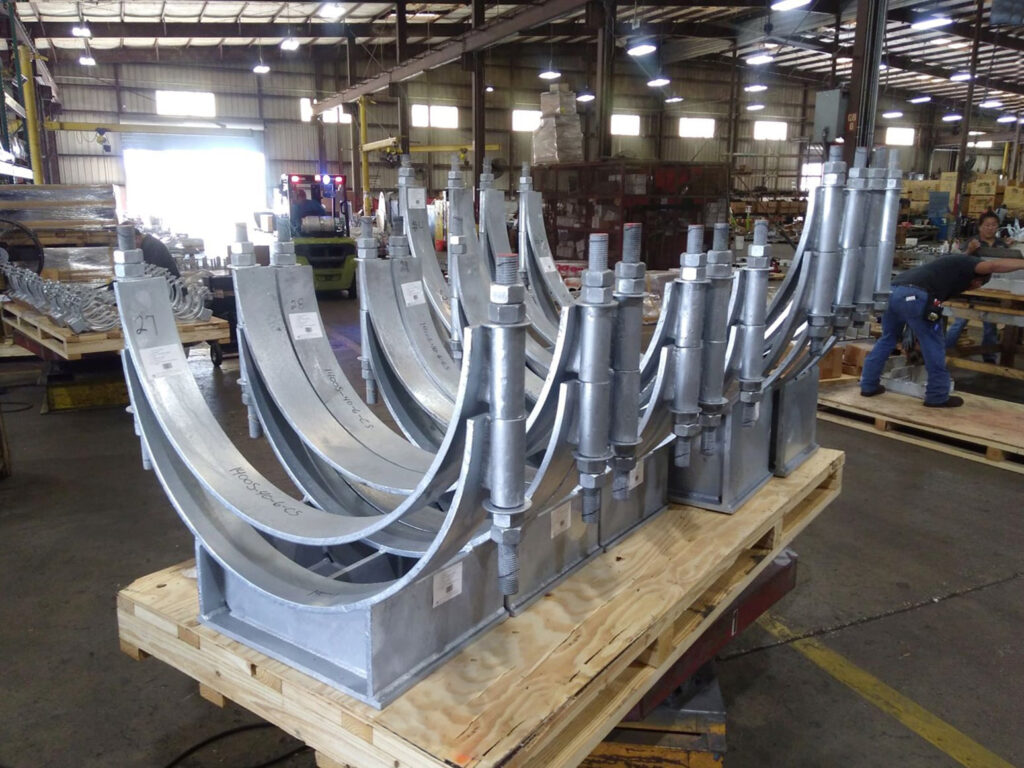
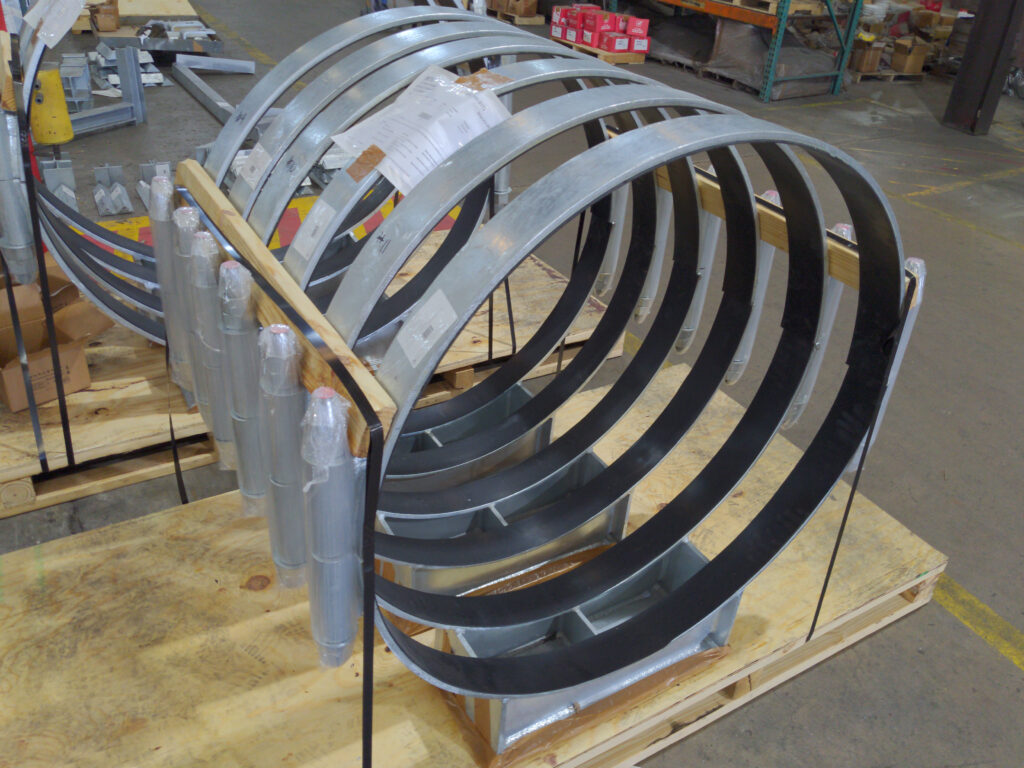
- Replaced overdesigned welded supports with clamp-on pipe shoes
- Sized supports based on actual operating loads
- Reduced field welding and hot work by approximately 90%
- Lowered material usage and fabrication complexity
This redesign directly addressed unnecessary cost drivers and improved efficiency.
Design Optimization & Constructability:
To ensure a buildable and efficient solution:
- Optimized support geometry for tight pipe rack constraints
- Standardized designs to improve manufacturability
- Integrated neoprene isolation to mitigate vibration and pipe interaction
- Delivered fully validated, stress-backed support configurations
These improvements enhanced constructability and enabled smoother installation execution.
Field Execution & Engineering Support:
PT&P extended support beyond design into active field involvement:
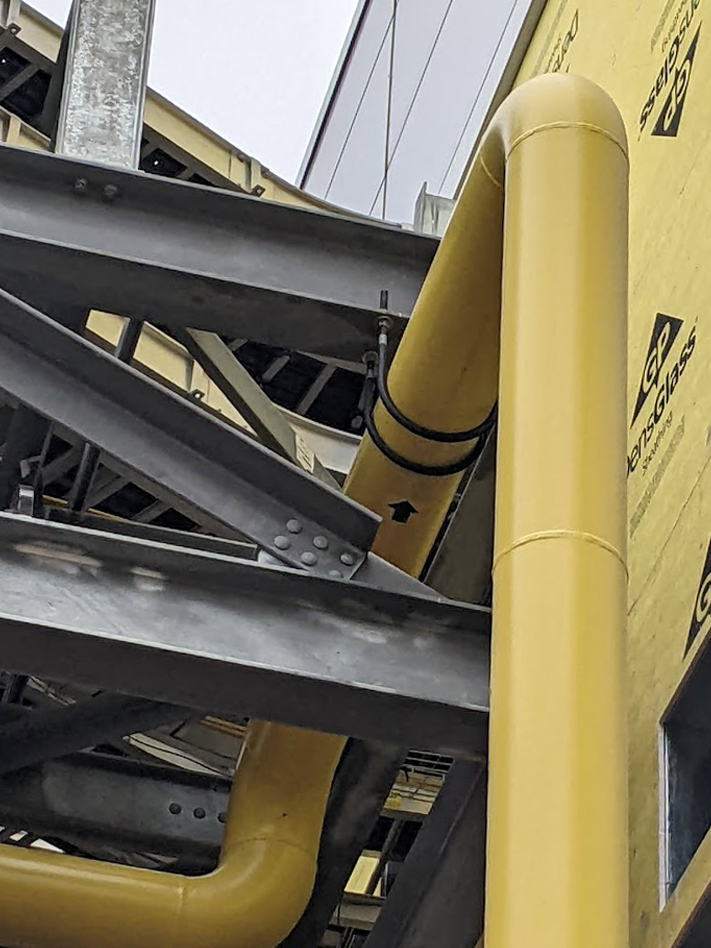
- Conducted daily walkdowns to verify installation and fit-up
- Identified and resolved misalignment issues early
- Ensured installation aligned with engineering intent
- Accelerated approval and system handover processes
This hands-on approach minimized rework and kept the project on track.
Results
The integrated engineering and field strategy delivered measurable improvements:
- Reduced procurement lead times from 14–20 weeks to approximately 6 weeks
- Lowered material costs by eliminating overspecification and excess steel
- Improved constructability by minimizing field welding and simplifying installation
- Accelerated project schedule and enabled on-time commissioning
- Unblocked engineering progress through validated stress analysis and model reconstruction