
Codes, Standards & Design Requirements
Building codes and project specifications continue to place greater emphasis on seismic protection, vibration isolation, and structure-borne noise control in mechanical systems. In HVAC, power, semiconductor, and industrial facilities, vibration generated by rotating equipment can transfer into building structures, creating noise, equipment instability, and long-term maintenance issues if not properly isolated.
The International Building Code (IBC) establishes seismic design requirements for structural safety in the United States. The International Mechanical Code (IMC Section 301.13) includes requirements related to vibration isolation for mechanical equipment. In many projects, these requirements are supplemented by ASHRAE design guidelines, which provide practical recommendations for isolator selection, static deflection, and vibration control performance based on the equipment type and building occupancy.
ASHRAE guidance is particularly important in applications where occupant comfort, sensitive equipment, or low-noise environments are critical. Typical isolation methods include elastomeric pads, spring mounts, restrained isolators, and hanging supports designed to reduce vibration transmission into the surrounding structure.
Types of Spring Isolators
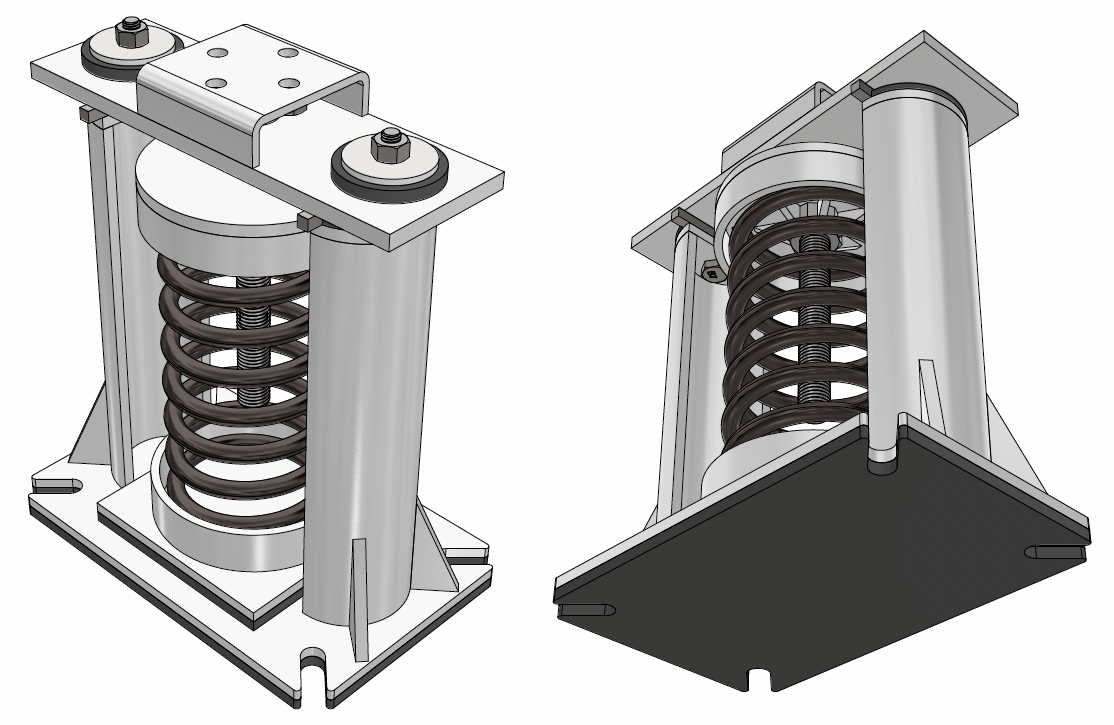
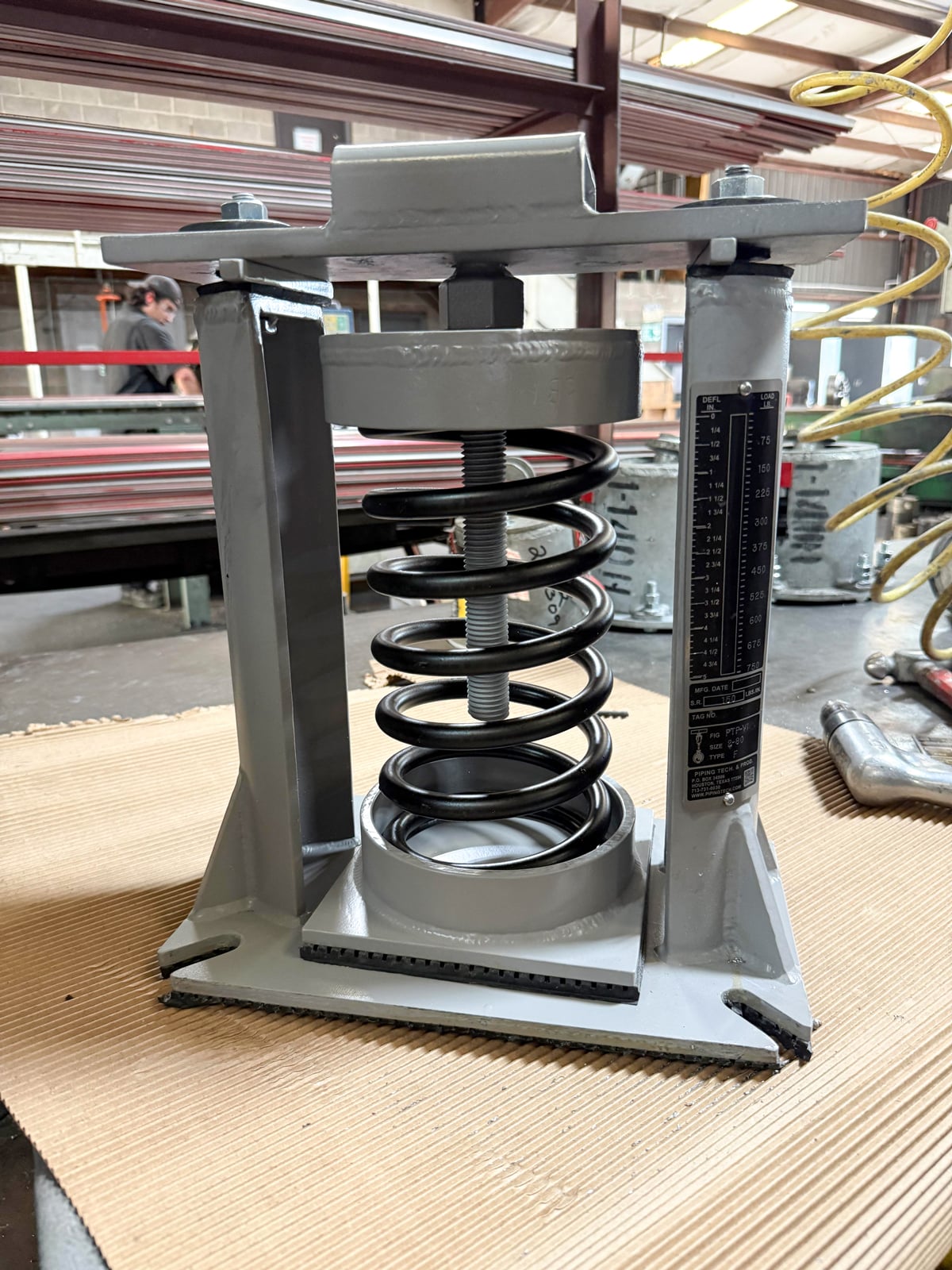
To support these requirements, Piping Technology & Products is introducing a range of spring isolators designed for vibration and noise control in mechanical and architectural applications. The product line includes:
- Free-standing spring isolators
- Restrained spring isolators
- Seismic isolators
- Spring hanger isolators
- Compact spring isolators
These isolators are designed to reduce the transmission of vibration from mechanical equipment into supporting structures while maintaining stability under operating and environmental loads.
Key Features & Benefits
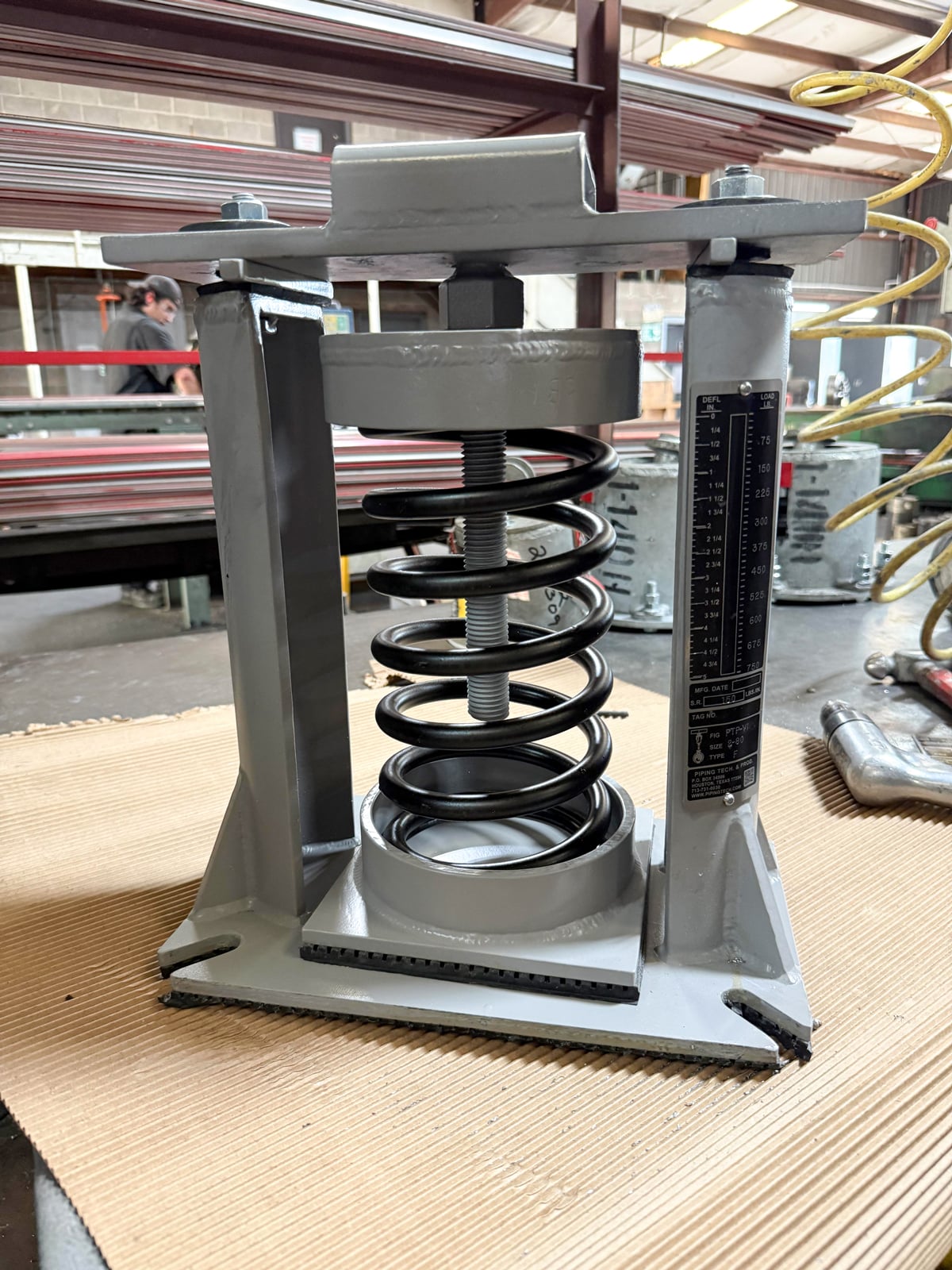
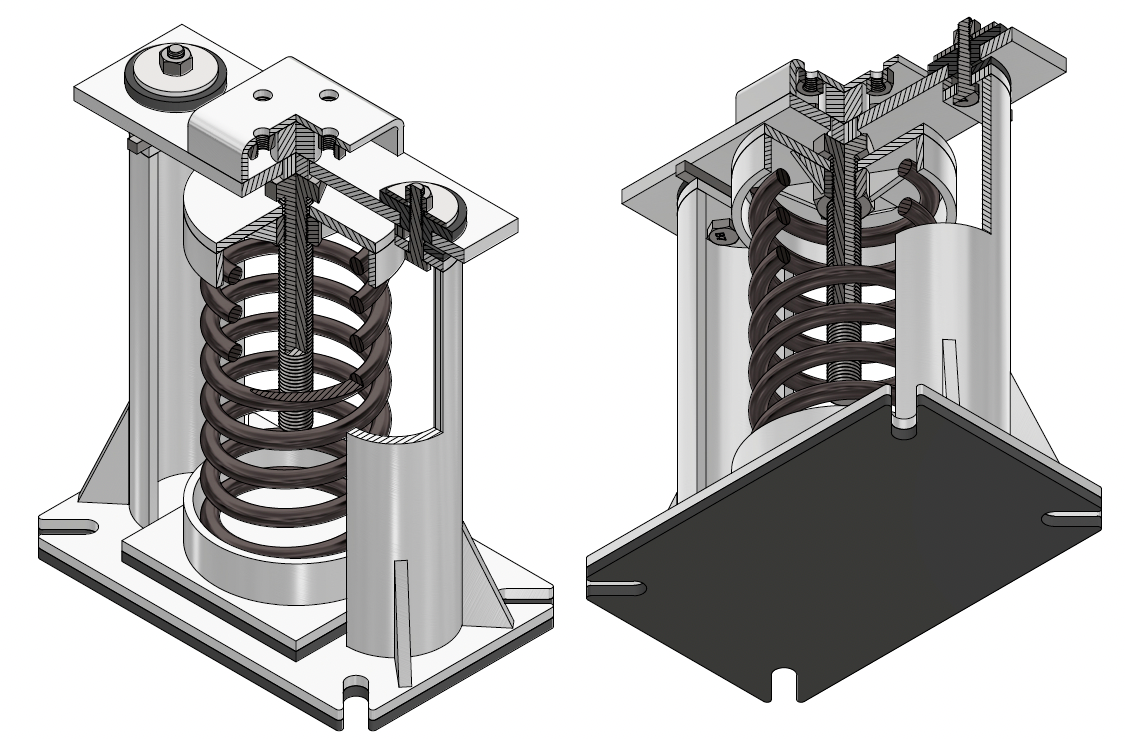
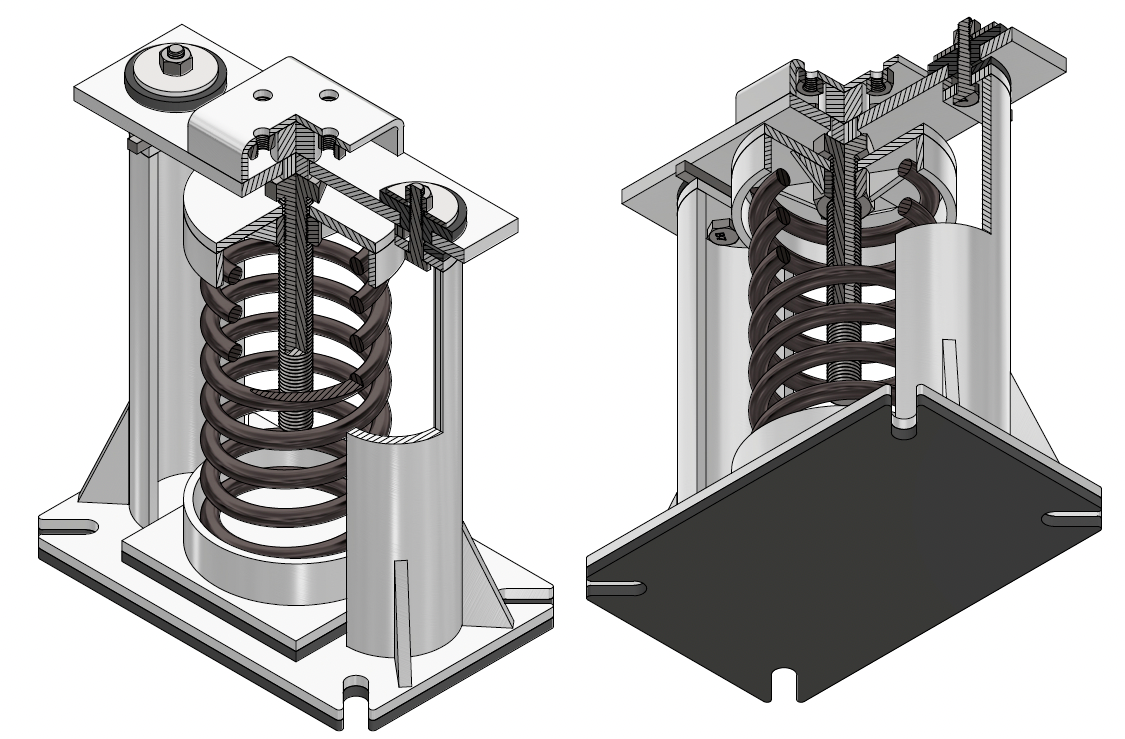
PT&P spring isolators are engineered to provide reliable vibration control and long-term performance in demanding applications. Key design features include:
- Low natural frequency designs for improved vibration isolation
- Broad load range capability
- Isolation efficiencies exceeding 80% of disturbing frequencies
- Visual leveling and deflection indicators for field adjustment
- Lateral stability for wind and overturning conditions
- Rubber acoustical pads to reduce structure-borne noise transmission
- Heavy-duty housings with corrosion-resistant finishes
- Designs capable of withstanding overload conditions up to 50%
Common Applications
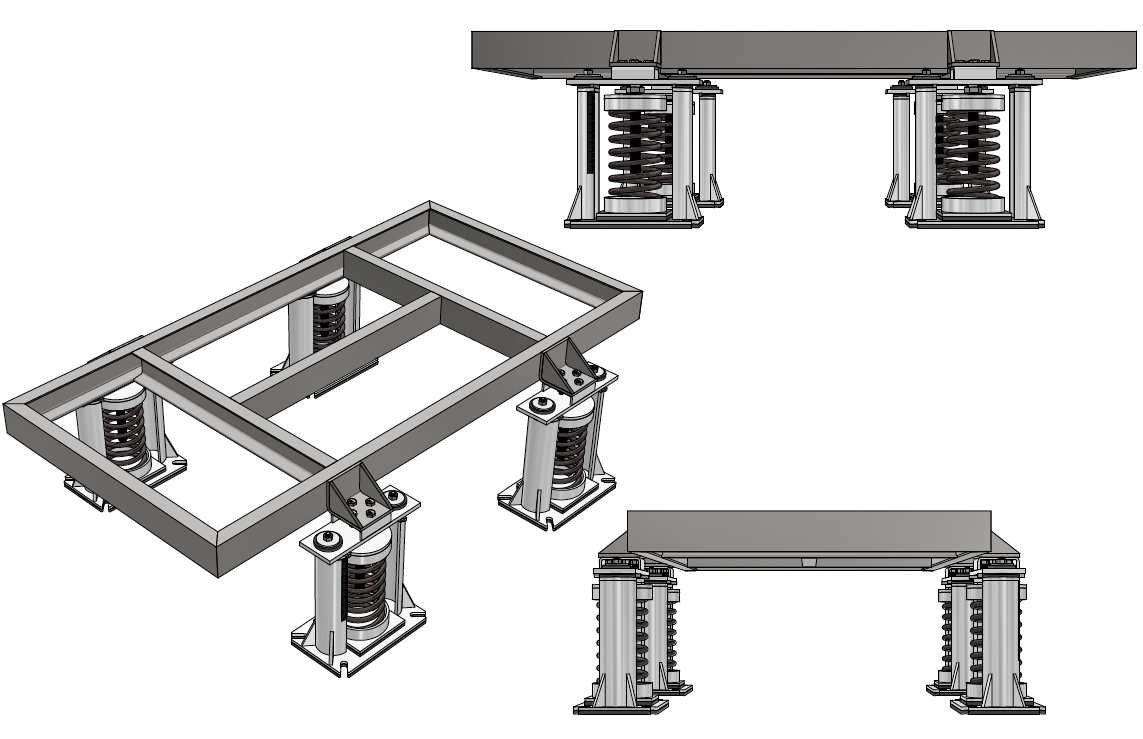
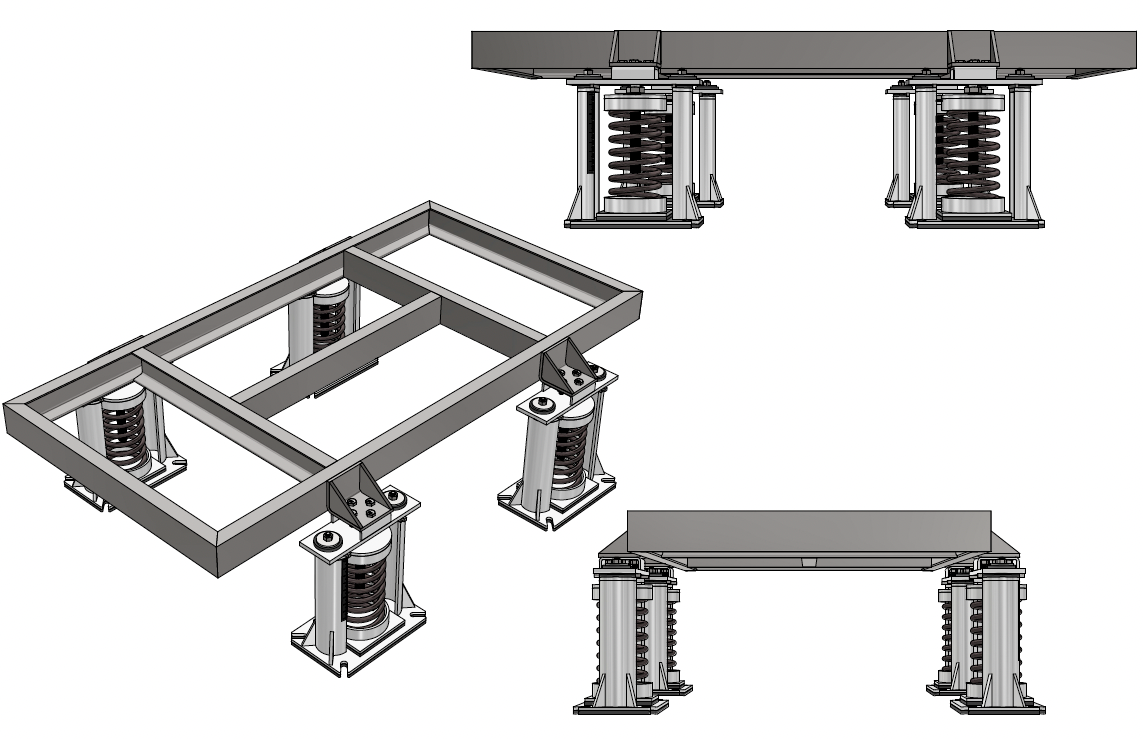
PT&P spring isolators are commonly used to support and isolate vibration-producing equipment, including:
- Pumps
- Chillers
- Cooling Towers
- Air Handling Units (AHUs)
- Fans
- Compressors
- Mechanical Skids
- Rooftop HVAC Systems
These solutions help improve equipment performance, reduce maintenance requirements, and minimize vibration and noise transmission into occupied spaces.
Request A Quote