
The Welding “Godfather” Behind Piping Technology’s In‑House School
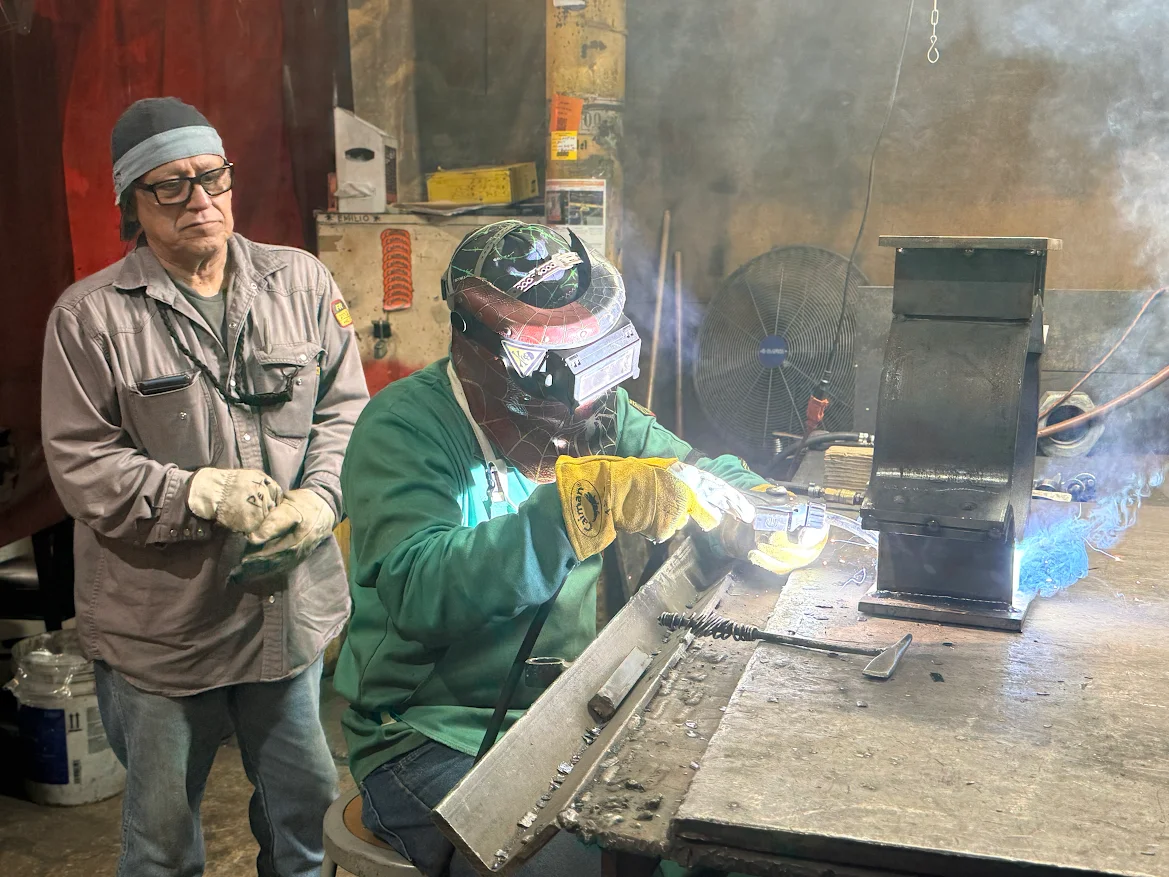
At Piping Technology & Products (PT&P), welding is more than a step in fabrication: it is the core skill that keeps piping systems safe, reliable, and in service for decades. That is why Piping Technology built its own in‑house welding school, led by Pedro “Pete” Hidalgo (pictured above), a veteran welder with more than 30 years of experience across refineries, heater boxes, and complex shutdown work across the U.S.
Pete is known on the shop floor as the “welding godfather”:
- He trains and mentors new welders.
- He tests and certifies every welding candidate before they are hired.
- He coaches experienced welders when they run into technical problems on live jobs.
His philosophy is simple: stay open‑minded, keep learning, and never compromise on safety or weld quality.
Why Piping Technology Built a Welding School
PT&P’s products, pipe supports, bellows, expansion joints, anchors, and guides, depend on welds that can handle heat, pressure, movement, and fatigue over long service lives. A weak weld in the wrong spot can lead to leaks, failures, and unplanned shutdowns.
To protect customers’ piping systems, Piping Technology chose to invest heavily in internal training rather than rely solely on the external labor market. That led to the creation of the PT&P Welding School, which:
- Runs as a full‑time, company‑funded program (not just weekend or after‑hours classes).
- Backfills participants’ previous roles so they can focus 100% on learning.
- Is embedded in the live fabrication area, so trainees learn on production‑grade equipment.
This is a high‑commitment model: for up to 90 days, participants step out of their regular jobs to focus solely on welding competency.
How the Basic Welding School Works
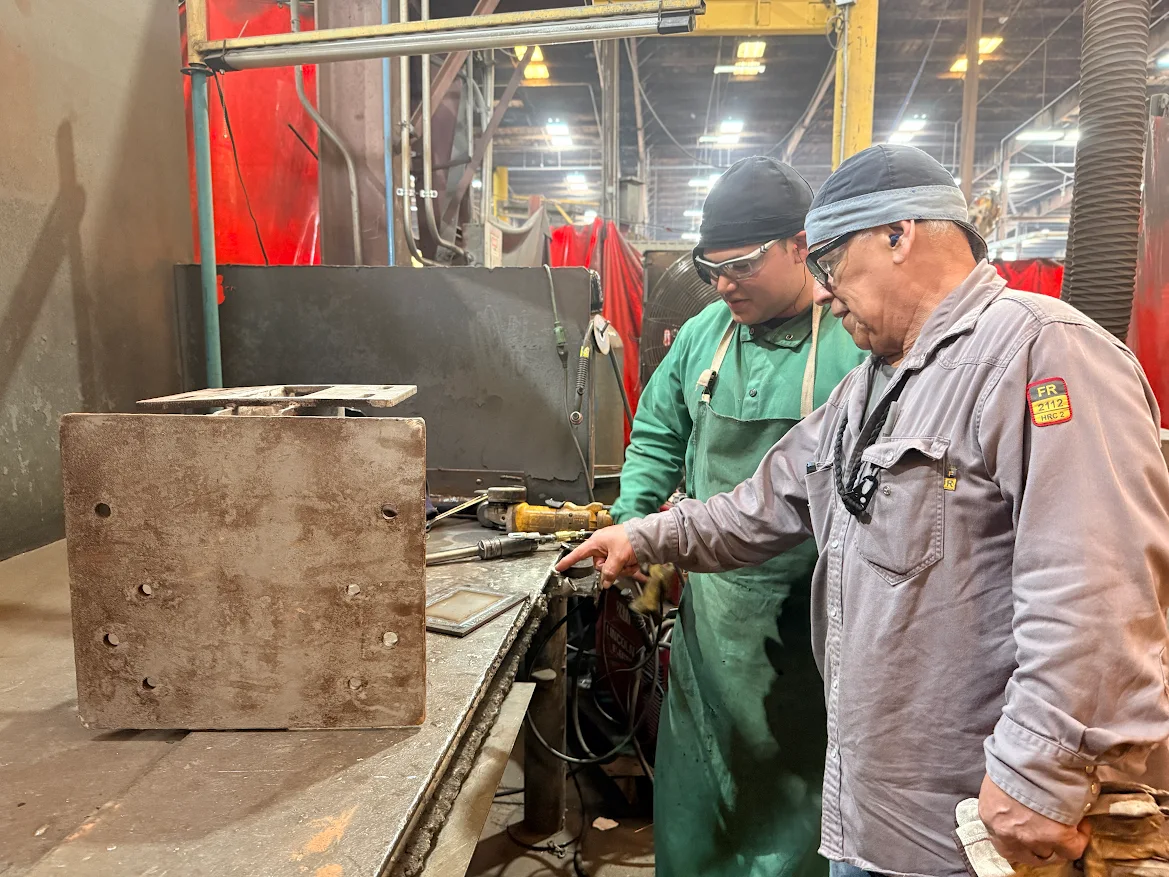
The initial welding school is designed for Piping Technology employees who want to move into welding or strengthen their skills.
Key elements include:
- Eligibility and vetting
- Must have at least one year at Piping Technology
- Attendance and performance history are reviewed
- Supervisor approval is required to address labor backfill
- Duration and structure
Planned as a 90‑day full‑time program- Some classes have produced strong welders in as little as 60 days
- Monday–Friday in the welding booths; Friday-Saturday buddy‑shifts in live production to apply what they’ve learned
- Core skills taught
- Safe use of multiple grinder types and sizes
- Cleaning and prepping material
- Cutting material with a torch
- Beveling the metal plate so it can be welded properly
- Flux‑core (FLUX) Mig welding as the foundational process
- Progression toward TIG/Heliarc for those with aptitude
Students earn a stamp when they pass the flux‑core test plate. The pass rate for that first certification has been about 90%, and graduates receive strong feedback from foremen, supervisors, and plant managers across the shop.
From the Classroom to Critical Products: Bellows, Expansion Joints, and More
“It is good to see a company like PT&P investing in a critical industry skill like welding for continued quality production and employee development,” said Training Coordinator Michael Mangione. “I’m excited to be part of the project to continue and develop internal training, such as the Piping Technology Welding School.”
Piping Technology’s welding school is not training welders in a vacuum. Every skill is mapped to the products that support piping systems in real plants:
- Pipe supports and restraints: Welders learn to produce consistent, structurally sound welds on supports that carry heavy loads and experience high vibration.
- Expansion joints and bellows: These components absorb thermal movement and pressure; welders must reliably join paper‑thin sheet material to thicker plate without burn‑through, using TIG/HeliArc techniques.
- Pipe anchors and guides: Precise welds on anchors and guides help control pipeline movement, reducing stress on equipment and preventing misalignment and damage.
For bellows, candidates are tested on their ability to weld extremely thin material to a 2″ x 10″ quarter‑inch plate without burning through the plate. Those who show potential move on to a 3G test and then into specialized bellows training booths, where they may spend several weeks before being released to production.
Several graduates from the welding school have already moved into Sweco Fab, a Piping Technology subsidiary, where they contribute directly to fast‑turnaround, high‑complexity builds that would typically take much longer elsewhere.
What Makes Piping Technology’s Training Different
“Our goal at PT&P is to be an organization of continuous learning, one where we encourage curiosity and position it as a core competency,” said Director of Human Resources Monique Woodard. “We want our teams to have opportunities for growth embedded in their employee experiences, no matter their role, background, education, or professional goals.”
PT&P’s value proposition to customers rests on three pillars, all supported by the welding school:
- Consistency and quality at scale
- Welders are trained to Piping Technology’s specific procedures for pipe supports, bellows, expansion joints, anchors, and guides.
- Every new welder is tested and bent (physically via coupon bend testing) before they touch customer work.
- In‑house expertise that evolves
- Pete continues to weld in production, so he stays hands‑on and current.
- He mentors rising welders, such as graduate Rodrigo Gurrusquieta, who now handle complex work and help train the next wave.
- Reliability of piping infrastructure
- By improving weld quality at the source, Piping Technology reduces rework, field issues, and customer downtime.
- The welding school builds a pipeline of skilled welders who can adapt to new materials, designs, and code requirements over time.
For Piping Technology, the welding school is both a talent- and quality‑control strategy. It ensures that every weld behind a pipe support, expansion joint, anchor, or guide is made by someone who has been trained, tested, and supported from day one.
What’s Next: Advanced Welding School
Piping Technology is now planning an advanced welding school track to build on the basic program. The advanced track will focus on:
- Advanced flux‑core and MIG plate work.
- TIG/Heliarc plate and, later, pipe.
- Pipe welding for field‑type and coded applications.
- Skills tailored to bellows, tank work, and other critical CO‑job fabrication.
The long‑term goal is a structured path for a motivated employee to progress from basic plate work to complex pipe and bellows welding, all within Piping Technology. The next welding school class starts on April 1, with approximately 40 new students, while the advanced school track is being planned for later in the year.
Secure Your Piping Systems with PT&P’s Expertly Trained Welders
If you’re responsible for piping systems and need reliable pipe supports, bellows, expansion joints, anchors, and guides, you benefit directly from the quality of Piping Technology’s welders.
- Learn more about how our welding school supports your projects and reliability goals.
- Talk with our team about upcoming work that demands high‑integrity welds.
- Explore how Piping Technology can help you standardize and support your piping infrastructure.
Contact Piping Technology & Products to discuss your next project and how our in‑house welding school helps protect your piping systems for the long term.