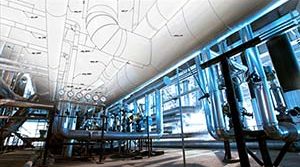
In industrial plants and piping infrastructure, pipes don’t just run horizontally; they frequently run straight up. This crucial vertical run of piping is known as a riser.
A pipe riser is simply any vertical pipe that conveys fluid, whether it’s water, steam, chemicals, or condensate, from a lower level to a higher level within a multi-story structure or an extensive piping network. Risers are essential components in various systems, acting as the primary distribution column.
Function and Significance in Vertical Distribution
Risers serve as the backbone of any vertical fluid distribution system. Their primary functions and significance are:
| System Role | Function and Significance |
| Vertical Distribution | The core purpose is to move media (fluids, gases, slurries) against gravity from a central supply point (such as a boiler or pump room) to different floors or levels within a facility. |
| Pressure Management | They manage the significant pressure change caused by elevation (static head). Risers must be robustly designed to handle the weight of the fluid column and the forces associated with pumping and vertical movement. |
| Thermal Expansion | Because risers are often very long and experience significant temperature changes (especially in steam or hot-water systems), they undergo substantial thermal expansion and contraction along their vertical axis. Components must be engineered to account for this vertical movement. |
| Support and Stability | A single long riser carries the weight of the pipe, the fluid inside, and, sometimes, the insulation. It requires specialized guides and support components on each floor to maintain stability, prevent sway, and distribute loads safely throughout the building structure. |
In short, a piping system cannot effectively operate without its risers. They are the arteries that supply HVAC, fire suppression, potable water, and process utilities to every level of a structure.
The Challenge: Stress, Sway, and Structural Integrity
The sheer length, weight, and movement of industrial and commercial risers present several engineering challenges:
- Axial Movement: The lengthening and shortening due to temperature changes must be absorbed, often requiring expansion joints (as discussed in a previous article) and guided supports.
- Pressure Thrust: Internal pressure generates powerful forces that must be restrained to prevent the pipe from tearing loose.
- Lateral Stability: Risers must be protected from swaying, vibrating, or being pushed off-center, which could lead to rubbing, wear, and eventual failure at penetration points (where the pipe passes through the floor slab).
Advanced Riser Support and Vertical Movement Management with Piping Technology and Products
Managing the complexity of vertical movement and support is where specialized pipe support systems become vital. A riser’s longevity depends entirely on how well it is supported, guided, and isolated from the building structure.
Piping Technology and Products (PT&P) delivers custom-engineered riser support solutions that eliminate pipe wear, control lateral movement, and safely distribute vertical loads. Our components simplify installation and protect your critical riser investments from the ground up, ensuring that when a riser moves vertically due to thermal expansion, it slides smoothly without damaging the pipe coating or compromising the structural integrity of the fire barrier and floor slab.
Secure Your Vertical Backbone
The riser is a key part of your infrastructure. Ensuring its reliability helps you to maintain operational uptime and safety. Don’t compromise the backbone of your vertical systems with inadequate support.
Are you ready to protect your risers from premature wear and structural damage? Contact Piping Technology today for engineered support solutions that boost safety and reliability. Download our catalog here.