Understanding Trunnions: A Core Component in Industrial Pipe Stress Management
A trunnion is a critical component in industrial piping, often unsung but vital to the structural integrity and longevity of a piping system. On the surface, it may seem like a simple piece of metal. Still, its function is complex: it serves as an interface to support and/or anchor the pipe.
What is a Trunnion and How Does it Function in Pipe Support?
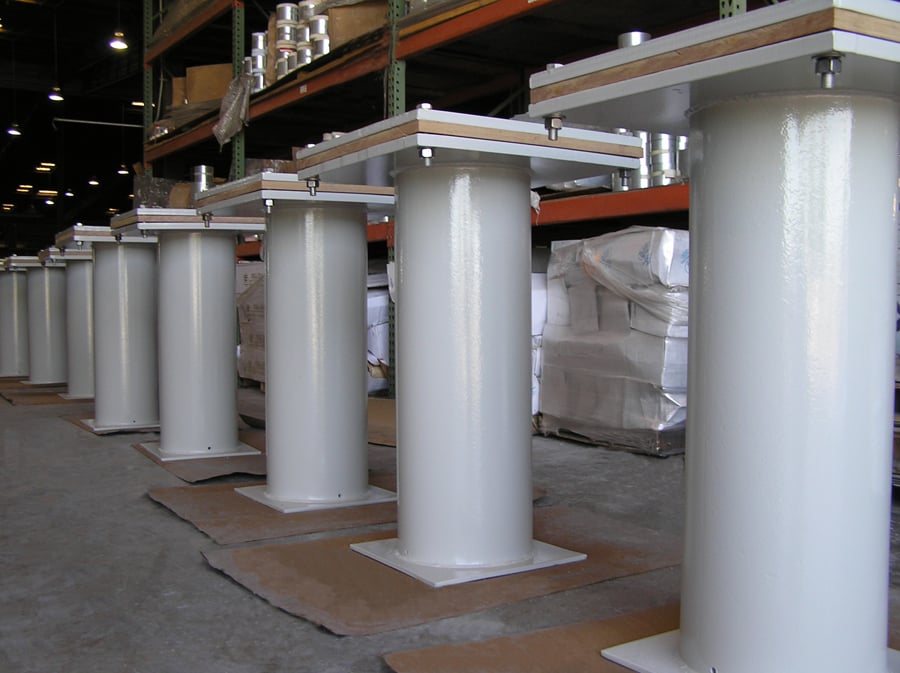
A trunnion is essentially a short length of pipe or solid bar that is welded perpendicularly onto the main process pipe. It is generally a rigid pipe attachment, such as a steel pipe or a structural steel member, that supports a pipe from below. Unlike a standard pipe shoe or saddle that simply rests underneath the pipe, the trunnion extends out, allowing it to connect directly to the structural steel or a secondary support member.
The trunnion’s primary function is to transfer the load (weight of the pipe, fluid, insulation, and any potential dynamic forces) from the pipe to the primary support structure.
- Load Distribution: It concentrates the load at a specific, engineered point, distributing the weight evenly across the main pipe’s circumference at the weld joint.
- Preventing Stress Concentration: By providing a defined attachment point, it prevents the main pipe from experiencing undue local stresses that could lead to fatigue failure.
- Anchoring: In some configurations, trunnions can act as anchors, restricting the pipe’s movement in one or more directions (e.g., axial, lateral, or vertical movement).
Key Design Considerations for Effective Trunnion Installation
The successful use of a trunnion depends heavily on meticulous design and welding to ensure the integrity of the pipe wall. The design process must account for several factors:
1. Stress Analysis at the Weld Point
The most critical area is the trunnion-to-pipe weld connection. A specialized local stress analysis must be performed to ensure that the stress intensification factor (SIF) is acceptable.
- The added force from the trunnion attachment can cause high, localized stresses in the main pipe wall.
- Designers use standards such as ASME B31.1 or B31.3 to govern allowable stresses and ensure the junction can withstand operational loads, including internal pressure, thermal expansion, and external forces.
2. Material and Dimensions
The trunnion material should be compatible with the pipe material to ensure a high-quality weld and similar thermal expansion properties.
- Size: The trunnion size is carefully selected. A larger size spreads the load over a greater area, reducing localized stress, but it also adds more weight and can interfere with other components.
- Length: The length must be sufficient to span the required distance from the main pipe to the support structure, often including insulation thickness.
3. Support Configuration
Trunnions often connect to different types of structural supports:
- Slide Plates and Guides: The trunnion is frequently capped with a slide plate (made with PTFE or graphite) and placed within a pipe guide to allow for axial thermal movement while restraining lateral movement.
- Support Shoes: When the pipe needs to be elevated, the trunnion can be attached to a secondary support shoe, further transferring the load to the primary steel.
Proper trunnion design is not just about holding the pipe up; it’s about managing dynamic movement and preventing fatigue failure over decades of operation. Choosing the right support technology, like custom-engineered supports from Piping Technology and Products, ensures these critical connections are executed flawlessly.
Is your piping system subject to extreme loads, high temperatures, or complex thermal movement? Don’t risk failure with standard supports. Contact our experts for a comprehensive pipe stress analysis and custom trunnion-based support solutions engineered for reliability.