How Standards Hold Your Piping Together
For piping engineers, specifications are the bedrock of reliable and safe systems. Yet, behind every material requisition and fabrication drawing lies a crucial, often underappreciated, authority: the Manufacturers Standardization Society of the Valve and Fittings Industry (MSS). Adherence to MSS standards isn’t just a best practice; it is the non-negotiable blueprint for achieving optimal system integrity and avoiding costly field failures.
This post breaks down the core MSS standards that every piping engineer must not only know but actively implement in their daily work, ensuring your next project moves from design to commission with flawless execution.
The MSS Standards You Need to Understand
MSS SP-25: The Language of Identification
MSS SP-25, Standard Practice for Marking System for Valves, Fittings, Flanges, and Unions, is the most fundamental standard. It provides the required method of marking components, ensuring immediate and accurate identification of:
- Manufacturer: Who made it?
- Material: What it’s made of (e.g., A105, 316 SS).
- Pressure/Temperature Rating: Its operational limits.
- Size: Its nominal dimension.
Failure to verify SP-25 compliance can lead to installation errors, material mix-ups, and catastrophic failures.
MSS SP-97: The Strength of Branch Connections
When designing a branch connection (a smaller pipe joining a larger header), you must ensure adequate reinforcement. MSS SP-97, Integrally Reinforced Forged Branch Outlet Fittings—Socket Welding, Threaded, and Buttwelding Ends, sets the dimensional, tolerance, and strength requirements for these critical components, commonly known as O-lets (e.g., Weldolets, Thredolets).
- Key Insight: SP-97 fittings are designed to provide the required area replacement for the hole cut in the header pipe, while maintaining the system’s original pressure capacity.
MSS SP-43: For the Corrosion-Resistant Systems
When working with light-wall, corrosion-resistant materials, such as those used in chemical or cryogenic service, you must reference MSS SP-43, Standard Practice for Wrought Stainless Steel Butt-Welding Fittings. This standard defines the dimensions and tolerances for stainless steel and related alloy fittings (e.g., elbows, tees, and reducers) with Schedule 5S or 10S wall thickness.
- Why it Matters: Using the wrong dimensions here can lead to improper fit-up, requiring excessive welding or grinding, which compromises the integrity of the corrosion-resistant material.
MSS SP-58: The Support System
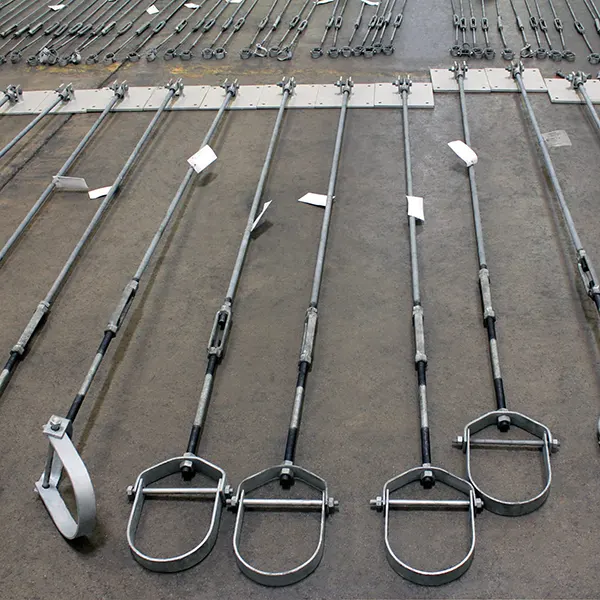
Valves, pipes, and fittings are only as stable as their support structure. MSS SP-58, Pipe Hanger and Support—Materials, Design, Manufacture, Selection, Application, and Installation, is the bible for specifying pipe supports. It provides detailed guidance on:
- Load Calculation: Determining the required capacity.
- Material Selection: Choosing the right material for the operating environment.
- Component Design: From rod hangers to spring supports.
Proper SP-58 application prevents excessive stress, vibration, and thermal expansion, which can drastically shorten the lifespan of your piping system.
Piping Technology and Products: Your Guarantee of MSS Compliance
At Piping Technology and Products (PT&P), our in-house engineering and fabrication teams ensure every pipe support, expansion joint, and custom fabrication strictly adheres to the relevant MSS, ASME, and ASTM specifications. When you choose PT&P, you are not just purchasing a product; you are investing in assured compliance and minimized risk. We are your technical partner in specifying and supplying products that genuinely meet the rigorous demands of your industry.
Take Control of Your Piping Integrity Today
Every successful project starts with a bulletproof specification. Are you confident that the components you are currently sourcing meet the complete requirements of the applicable MSS standards?
- Check Your Specs: Verify the MSS designation on your current material requisitions.
- Consult Our Experts: Leverage our deep engineering expertise to address your complex piping challenges.
Contact our engineering and design team for a custom quote to ensure your next project is not just built, but built to last.