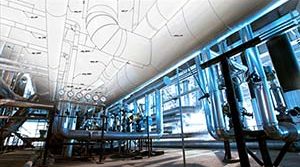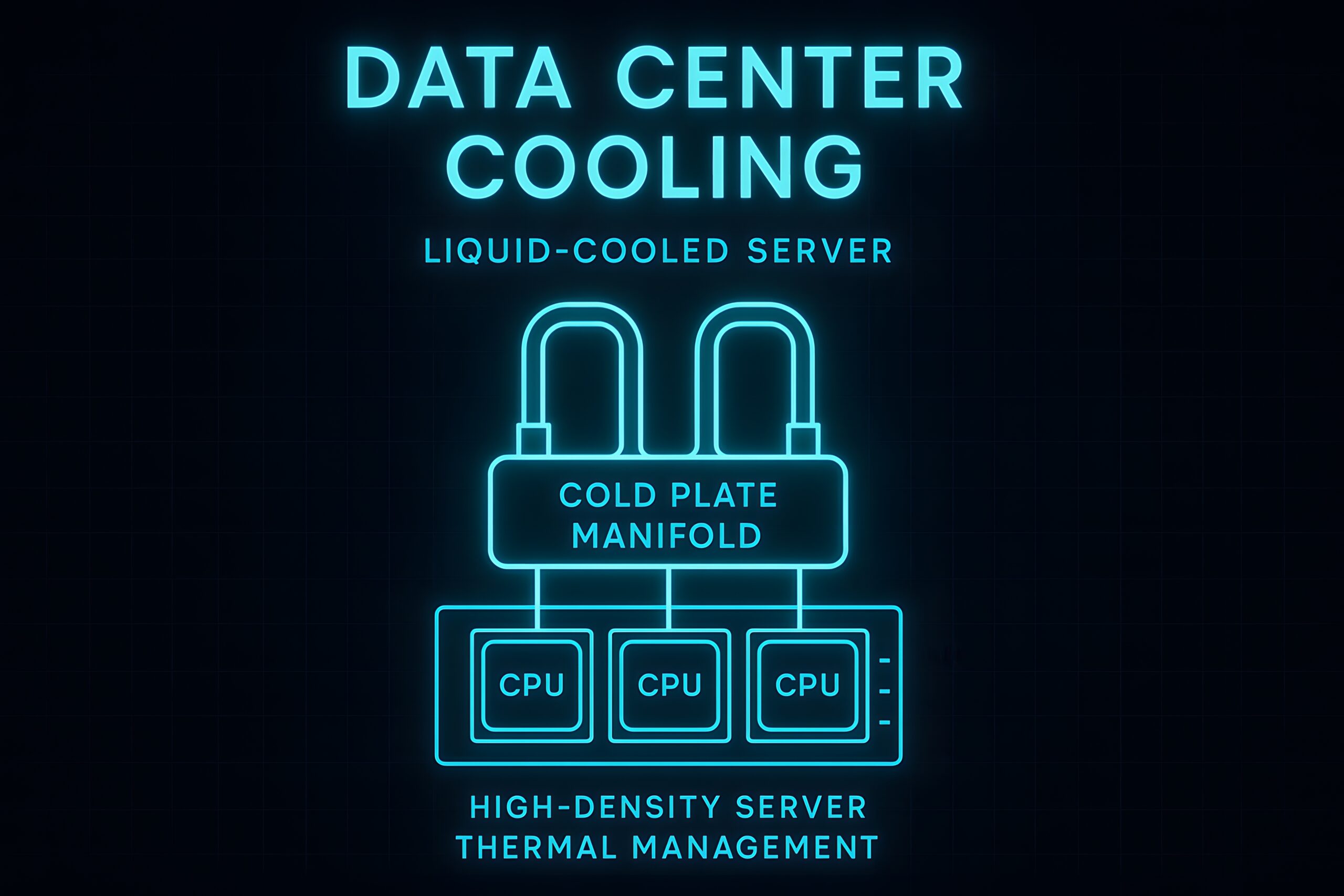
As the demand for high-density AI and cloud computing surges, legacy data centers—often called “brownfield” sites—are facing a critical crossroads. These facilities weren’t initially designed to handle the high heat loads generated by modern liquid-cooled systems or high-CFM (cubic feet per minute) air-conditioning systems.
Retrofitting these spaces isn’t just an engineering challenge; it’s a spatial puzzle. Integrating heavy-duty cooling piping into a facility with low overhead clearance and existing infrastructure requires more than standard parts—it requires custom-engineered solutions.
The Challenge: Modern Cooling in Tight Footprints
In a brownfield project, you aren’t working with a blank canvas. You are competing for space with existing electrical conduits, fire suppression systems, and structural columns. The introduction of large-bore chilled-water or dielectric-fluid piping introduces two major hurdles: weight and thermal expansion.
1. Custom-Engineered Pipe Supports
Standard off-the-shelf hangers often fail to fit in the narrow corridors of a legacy data center. Custom-engineered supports are designed to:
- Maximize Vertical Space: Low-profile designs that allow piping to run flush against the ceiling or under raised floors.
- Seismic and Vibration Isolation: Essential for protecting sensitive server racks from mechanical vibrations caused by new high-capacity pumps.
- Variable Spring Hangers: Used when vertical movement is expected, ensuring that the load on the piping system remains balanced without stressing the legacy building’s structure.
2. Compact Expansion Joints
Thermal expansion is the silent killer of rigid piping systems. As cooling demands fluctuate, pipes expand and contract. In a cramped legacy space, you don’t have the room for traditional large-scale expansion loops.
- Metallic Bellows: These provide a compact way to absorb axial, lateral, and angular movement within a very short face-to-face distance.
- Pressure Balanced Expansion Joints: These allow for expansion absorption at a turn in the piping without exerting excessive pressure thrust on the building’s existing (and perhaps aged) structural anchors.
- Custom-designed U-Loops: This hybrid design offers flexibility for thermal and seismic movement and integrates well in retrofits with critical space constraints.
How to Future-Proof Your Facility: Cooling Retrofit FAQs
How do you integrate liquid cooling piping into a brownfield data center?
Integrating liquid cooling into a brownfield data center requires a combination of high-density pipe routing, custom-engineered low-profile supports, and compact expansion joints. Because legacy facilities often lack the structural capacity to support heavy new loads, engineers must use finite element analysis (FEA) to design supports that distribute weight effectively while avoiding existing utilities.
What are the benefits of using compact expansion joints in data center retrofits?
Expansion joints can absorb thermal movement in areas where an expansion loop will not fit.. This saves critical floor and overhead space, reduces the number of required fittings, minimizes pressure drop, reduces the potential for vibration, and lowers the energy required to move material through the pipe, thereby increasing cooling efficiency.
How do you prevent structural overload when adding heavy piping to legacy ceilings?
To avoid compromising the structural integrity of an older facility, use variable spring hangers and lightweight custom brackets designed for load distribution. By conducting a structural analysis and pipe stress analysis. We can use engineered pipe supports, such as variable- and constant-effort spring hangers, to compensate for thermal expansion and absorb pipe movement. You can ensure that the added weight of chilled water lines is distributed across multiple support points, preventing localized stress on aging concrete or steel beams.
What is the best way to isolate vibration from new cooling pumps in a cramped space?
The most effective way to manage vibration in tight footprints is to install rubber expansion joints immediately adjacent to the pumps. These components absorb high-frequency mechanical noise and vibration before they can travel through the piping network to sensitive server racks, while requiring much less space than traditional inertia bases or long piping runs.
Cooling Piping Modernization
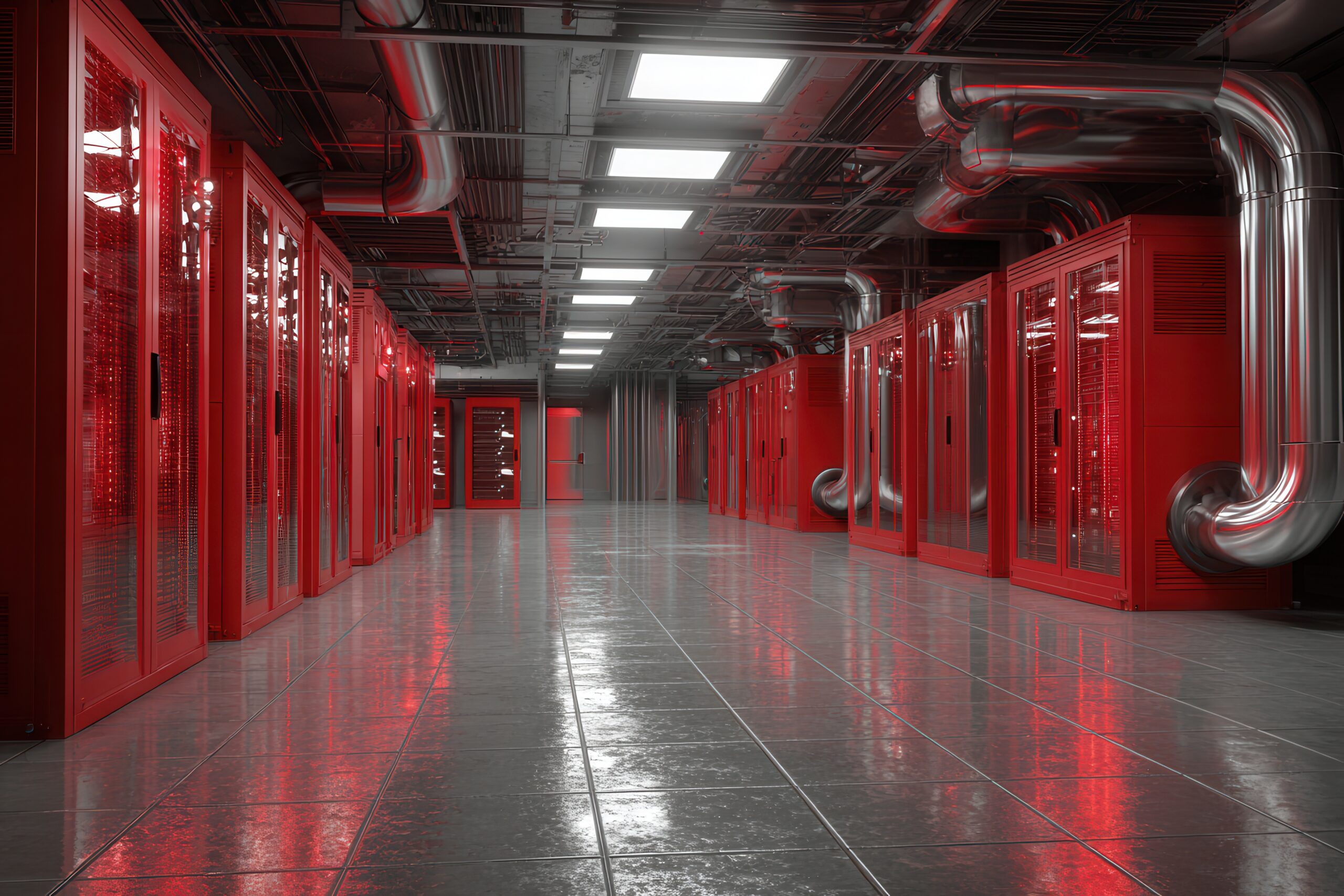
Engineering High-Density Cooling Solutions for Brownfield Facilities. Modernizing a legacy data center is an exercise in precision. By utilizing custom-engineered pipe supports and space-saving expansion joints, operators can transition to high-density cooling without the massive capital expenditure of a new build. Whether you are dealing with restricted overhead heights or the structural limitations of an aging building, the proper hardware makes the difference between a failed installation and a future-proofed facility.
Technical Specifications: Pipe Supports for Infrastructure Retrofits
To help you identify the most effective hardware for navigating restricted footprints and structural constraints, the following chart compares specialized pipe supports used in high-density modernization projects.
| Support Type | Best Use Case | Modernization Advantage | Load Capacity |
| Variable and Constant Effort Spring Hangers | Systems with vertical thermal movement. | Prevents stress on aging structural ceilings by “floating” the load. | High (Customizable) |
| Low-Profile Pipe Shoes | Tight clearances under raised floors or near ceilings. | Minimizes the pipe run’s “vertical footprint” to save headspace. | Medium to High |
| Slide Bearings (PTFE) | Long horizontal runs require lateral movement. | Reduces friction and lateral force on existing building anchors. | Very High |
| Seismic Bracing | Facilities in high-risk zones or upper floor levels. | Keeps new, heavy cooling lines stable during tremors without bulky frames. | High |
| Vibration Isolation Hangers | Near high-capacity pumps or CRAC units. | Prevents mechanical “hum” from interfering with sensitive server disk drives. | Low to Medium |
Technical Specifications: Expansion Joints for Modernization
To help you select the right hardware for a tight legacy footprint, use the chart below to compare the performance of various expansion solutions.
| Feature | Metallic Bellows (Axial) | Pressure Balanced Elbow | Rubber Expansion Joint |
| Primary Movement | Axial (Compression/Ext.) | Multi-plane (Low Thrust) | Vibration & Noise |
| Space Efficiency | Excellent (Compact) | Moderate (Large footprint) | Good (Short face-to-face) |
| Pressure Rating | High (Up to 1000+ PSI) | High (Varies by design) | Low to Moderate |
| Temp. Range | -320°F to 1500°F+ | -320°F to 800°F+ | -40°F to 250°F |
| Best Use Case | Direct runs in tight corridors | Near pumps/sensitive anchors | Chilled water return lines |
| Modernization Edge | Maximize rack space | Protects aging structures | Isolates mechanical hum |
Pro Tip: In a legacy facility, the elbow pressure-balanced expansion joint is a game-changer because it absorbs movement without transferring the pressure thrust to the existing building anchors, which may not have been designed for modern high-pressure cooling loops.
Bridging the Gap Between Legacy Structures and Future Cooling with PT&P
At Piping Technology & Products (PT&P), we specialize in the “impossible” fit. We understand that in a legacy data center, every inch saved is an inch available for revenue-generating server racks.
We offer a vertically integrated approach to brownfield modernizations:
- On-Site 3D Laser Scanning: We can map your existing facility to design supports that fit the first time.
- Custom Fabrication: From cryogenic supports for advanced cooling to heavy-duty spring hangers, we manufacture everything in-house to meet your specific spatial constraints.
- Emergency Turnaround: We understand that downtime is not an option for data centers; our rapid-response manufacturing keeps your modernization project on schedule.
Contact Piping Technology & Products to discuss custom-engineered support solutions for your next data center retrofit.