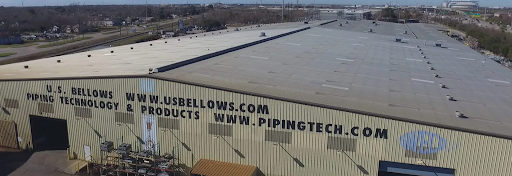
PT&P Facility In Houston
PT&P’s Approach to Year-End Capital Project Capacity: A Look at How We Operate
Project teams planning capital work frequently ask a question: how much capacity does PT&P have, and when is the right time to engage?
The answer depends on understanding how engineered pipe support manufacturing actually works. Engineered pipe supports are specification-driven products, they are sized, designed, and fabricated against confirmed engineering packages. That characteristic shapes everything about how PT&P structures its production model and how we commit to project schedules.
This post explains the mechanics of our capacity planning and what procurement managers and project engineers need to know when scheduling fabrication for an upcoming capital project.
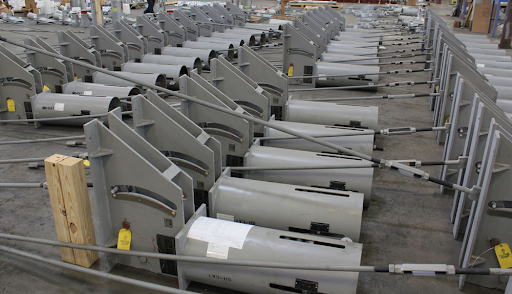
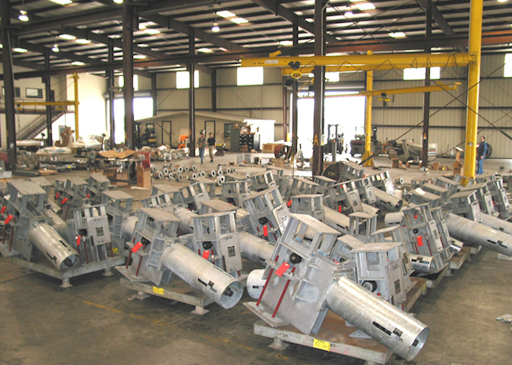
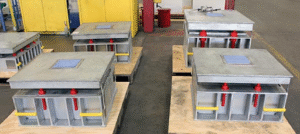
Constant Spring Support in PT&P’s Houston Facility
The T-60 to T-90 Planning Window
In engineered pipe support manufacturing, the production-ready scope typically becomes available 60 to 90 days before a project’s need date. This is true even within PT&P’s most established, long-term partnerships.
The reason is straightforward: engineered spring supports, expansion joints, snubbers, and custom-fabricated supports are all produced against a confirmed bill of materials, a completed stress analysis, and a released engineering package. Fabrication cannot commence until that package reaches IFC status. It is inherent in specification-driven manufacturing.
For procurement teams, the T-60 to T-90 window is when fabrication adherence needs to be confirmed, raw materials must be ordered, and production slots must be allocated. Partners who bring PT&P into the conversation early in this window have the most reliable path to on-schedule delivery. For more on how pipe stress analysis drives the release of engineering packages, see our pipe stress analysis resources.
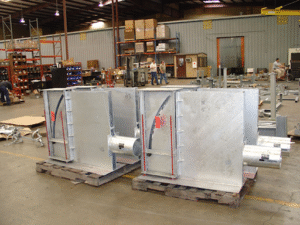
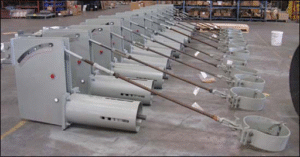
Custom-Made Spring Supports at PT&P Facility
How PT&P Balances Workload Across Multiple Production Lines
PT&P operates multiple production lines within our 450,000-square-foot Houston manufacturing facility. This structure is a deliberate feature of our production model.
When multiple capital projects are active simultaneously, our production team balances workloads across lines based on four variables: need date, material availability, production capacity, and fabrication capability. Spring supports, expansion joints, slide plates, snubbers, and custom ASME fabrication each carry different material and labor profiles. Running these product types across dedicated lines allows PT&P to optimize throughout without allowing one project’s timeline or material lead time to compress another’s.
This structure also gives PT&P a practical response when project schedules compress. When a partner’s need date moves due to field conditions or procurement changes, our team has the operational latitude to reassign resources across lines rather than treating each project as a fixed sequential queue. This is one of the capabilities described in our customization and expedited delivery offering.
PT&P processes over 10,000 orders per year, ranging from multi-year capital projects to 24-hour plant turnaround deliveries. This production range is sustained by a US-based manufacturing model built around flexibility and fabrication complexity.
PT&P is also the only global manufacturer with the capability to produce both pipe supports and expansion joints, allowing project teams to consolidate scope across product types with a single fabricator. Across all of this, our production team reallocates resources and adjusts priorities on a daily and weekly basis to keep pace with shifting project demands.
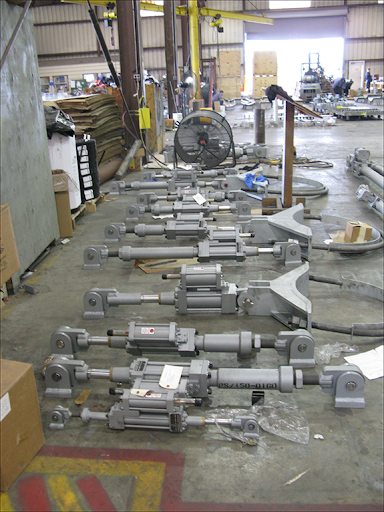
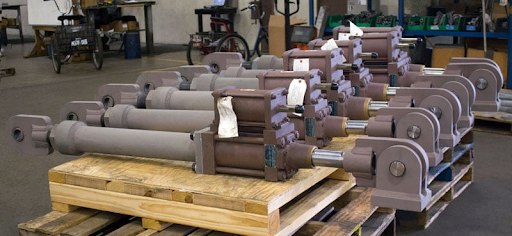
Mechanical & Hydraulic Snubber Made in Fronek Facility
Regional Partnerships That Extend Production Capacity
PT&P maintains established relationships with strategic manufacturing partners in the Houston region. These partnerships are a designed component of our production model.
When aggregate demand across our shop exceeds in-house capacity at a given point in the schedule, specific stage operations, including subassemblies and fabricated structural components, can be distributed to qualified regional partners. PT&P’s quality oversight and documentation requirements apply to these operations in full. Components produced externally as part of a PT&P order are subject to the same QA/QC standards and traceability requirements as those fabricated in-house.
The practical result is that PT&P’s effective production capacity is not a fixed ceiling. It scales with project demand in a controlled, quality-assured way. For projects involving nuclear-grade or critical service snubbers, our subsidiary Fronek Anchor Darling, based in Laconia, New Hampshire, operates as an ASME Nuclear Stamp (“NS”) Certificate Holder with its own dedicated production infrastructure.
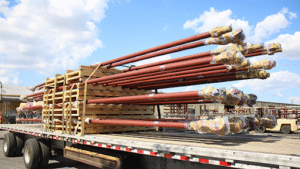
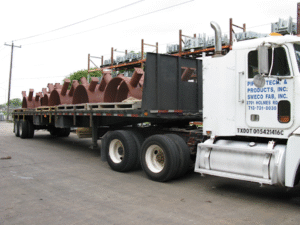
Order Shipments Being Packed & Shipped
Current Capacity Position
Projects currently in production at PT&P are progressing through fabrication and moving toward shipment. As this work winds down, shop capacity is opening across multiple lines.
With our current load trajectory, PT&P has the capacity to take on an additional 3 to 7 capital projects before year end. That figure accounts for in-progress work, material lead times for incoming scope, and production line capacity across our facility.
For project teams currently in the engineering phase or approaching IFC, this represents a realistic window for securing fabrication capacity. The earlier PT&P can review the scope and align on need dates, the more precisely we can commit to a production schedule. If your project involves an accelerated timeline or an emergency turnaround requirement, see our 24×7 Quick-turn Emergency services.
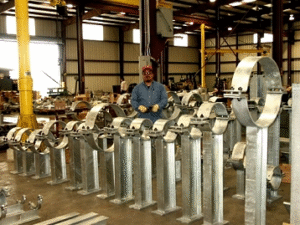
Custom-Made Pipe Clamp & Risers
What Procurement Teams Should Know About Scheduling Pipe Support Fabrication
A late pipe support holds up mechanical installation, delays hydro testing, and pushes the critical path. In refineries, power plants, LNG terminals, and chemical facilities, delays in commissioned equipment carry significant financial consequences. For a detailed look at the industries PT&P serves, see our refinery solutions and power plant solutions pages.
The reliability of a fabricator’s manufacturing model is a project risk variable. PT&P has built its operations around short lead times by design, multi-line production, and scalable regional capacity. For procurement managers evaluating fabricator capacity heading into the second half of the year, PT&P is accepting new capital project scope.
Contact our team to discuss your scope, timeline, and material requirements: Contact us or schedule a call with one of our engineers to discuss the project specifications and get your questions answered.
Read More