The Critical Role of Pipe Clamps in Refinery Operations

November 7, 2025


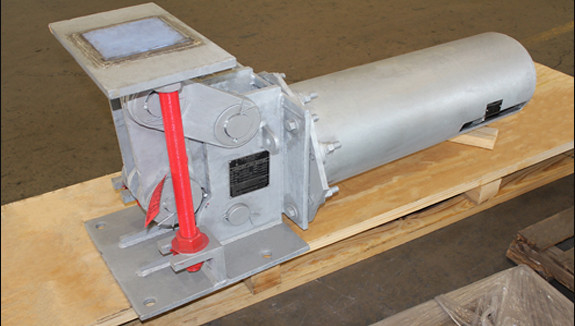
Pipe clamps from Piping Technology and Products.

The modern refinery is an environment of non-stop, intense chemical processing. From high-pressure hydrocracking units to vast cooling towers, the piping systems within this complex landscape manage corrosive chemicals, superheated steam, and extreme temperature swings. Because of this, the integrity of every single pipe run is critical. At the heart of this stability is the pipe clamp. These components are the non-negotiable anchors that secure the system, manage its movement, and prevent catastrophic failures.

Why Standard Clamps Don’t Cut It 

In a refinery, the demands placed on a pipe clamp are far greater than in standard commercial or residential applications. Failure is not just an inconvenience; it represents a major safety risk, environmental hazard, and millions in lost production. Refineries require pipe clamps to contend with:

  • High Temperatures & Pressure: Pipes carrying superheated crude oil fractions or high-pressure steam require clamps engineered with materials that maintain strength and integrity well above standard ambient conditions.
  • Corrosive Environments: Exposure to sulfur compounds, hydrogen sulfide (H2S), and various acids requires corrosion-resistant materials (such as Stainless Steel 304/316) and specialized coatings to prevent premature degradation.
  • Vibration & Dynamic Loads: Pumps, compressors, and fluid flow create constant vibration. Clamps must be robust enough to dampen oscillation while securely holding the pipe, preventing metal fatigue and connection failure.
  • Thermal Movement: Significant temperature differences cause pipes to expand and contract. Clamps must guide this movement effectively to prevent undue stress on connected equipment, such as valves and heat exchangers.

Key Types of Clamps Driving Refinery Integrity and Safety

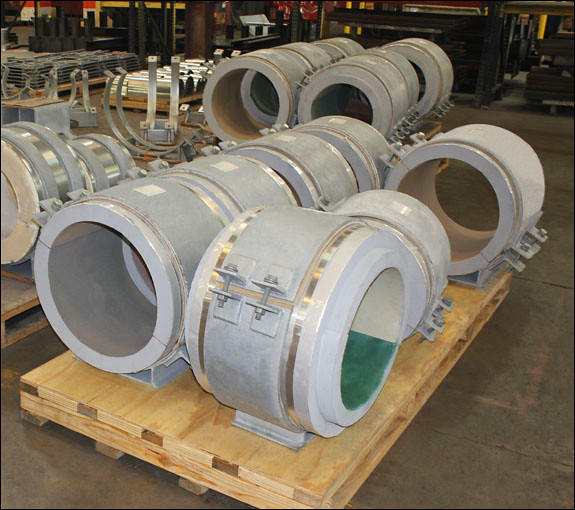
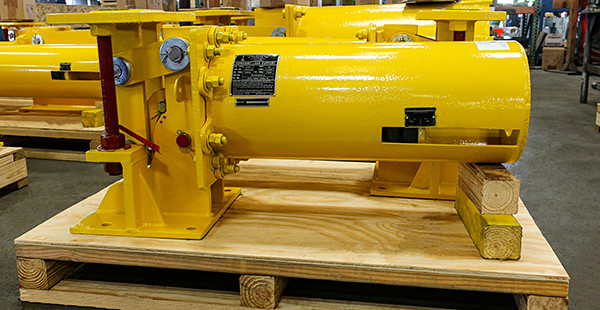
Pipe clamps from Piping Technology and Products.

The severity of the application dictates the type of pipe clamp used: these are some of the most common:

  • Two-Bolt and Three-Bolt Heavy-Duty Clamps: These are the workhorses of the refinery. Their split-design construction and multiple bolts provide superior clamping force, making them ideal for high-load, high-temperature horizontal lines.
  • Riser Clamps: Essential for securing and transferring the immense weight of vertical pipe runs (risers) to the structural steel, ensuring the load is safely distributed across multiple floors.
  • Cushioned and Lined Clamps: Often utilized to protect specialized piping (e.g., non-metallic or pipes with thin wall thickness) and to provide vibration isolation for sensitive instrumentation lines, preventing metal-to-metal contact and abrasion.
  • Leak Repair Clamps (Specialty): These are critical for emergency, in-service repairs, designed to encapsulate a leak and restore pressure integrity without shutting down the entire line—a major value driver in high-stakes refining.

Engineering for Uptime: The PT&P Advantage in Petrochemical Piping

Selecting and installing the correct pipe clamp is a complex engineering task that requires detailed knowledge of materials science, pipe stress analysis, and regulatory compliance (e.g., ASME B31 standards). This is where a specialized manufacturer becomes an invaluable asset.

At Piping Technology and Products,  we are the custom-engineered solution for your refinery’s most critical piping challenges. We deliver value by improving safety compliance through:

  • Custom Fabrication for Non-Standard Applications: Refineries often feature non-standard pipe diameters, unique insulation requirements, or extreme loading conditions. We specialize in designing and manufacturing bespoke, heavy-duty clamps—from enormous-diameter duct supports to high-pressure leak-repair clamps—that meet your exact, mission-critical specifications.
  • Material and Coating Expertise: We guarantee the longevity of your assets by selecting appropriate materials (e.g., specialized stainless steels and high-strength alloys) and applying advanced corrosion-resistant coatings (e.g., PTFE or hot-dip galvanizing) to withstand the specific corrosive agents present in your refining processes.
  • Rapid Response for Shutdowns and Emergencies: When a critical pipe support fails, speed makes all the difference. Our integrated engineering and manufacturing capabilities allow for industry-leading response times, delivering custom or specialty clamps faster than competitors to minimize costly downtime during turnarounds or unexpected incidents.

Security is in the Details

In the high-risk environment of petroleum refining, the performance of the pipe clamp is directly linked to personnel safety and the plant’s financial performance. Choosing a high-integrity, correctly engineered clamp is a critical decision. Partner with Piping Technology and Products to ensure that every connection in your refinery is built to endure the pressure, heat, and corrosive environment while keeping your processes secure and your operations profitable. We maintain an extensive inventory of pipe clamps required for both pipe hanger and support assemblies.

 Are you looking to fortify your refinery against failure? Connect with Piping Technology and Products’ engineering and field services experts today for a custom review of your critical pipe clamping needs.

Read More
Engineered for Extremes: The Science Behind the High-Temp Furnace Seal Bag

November 7, 2025

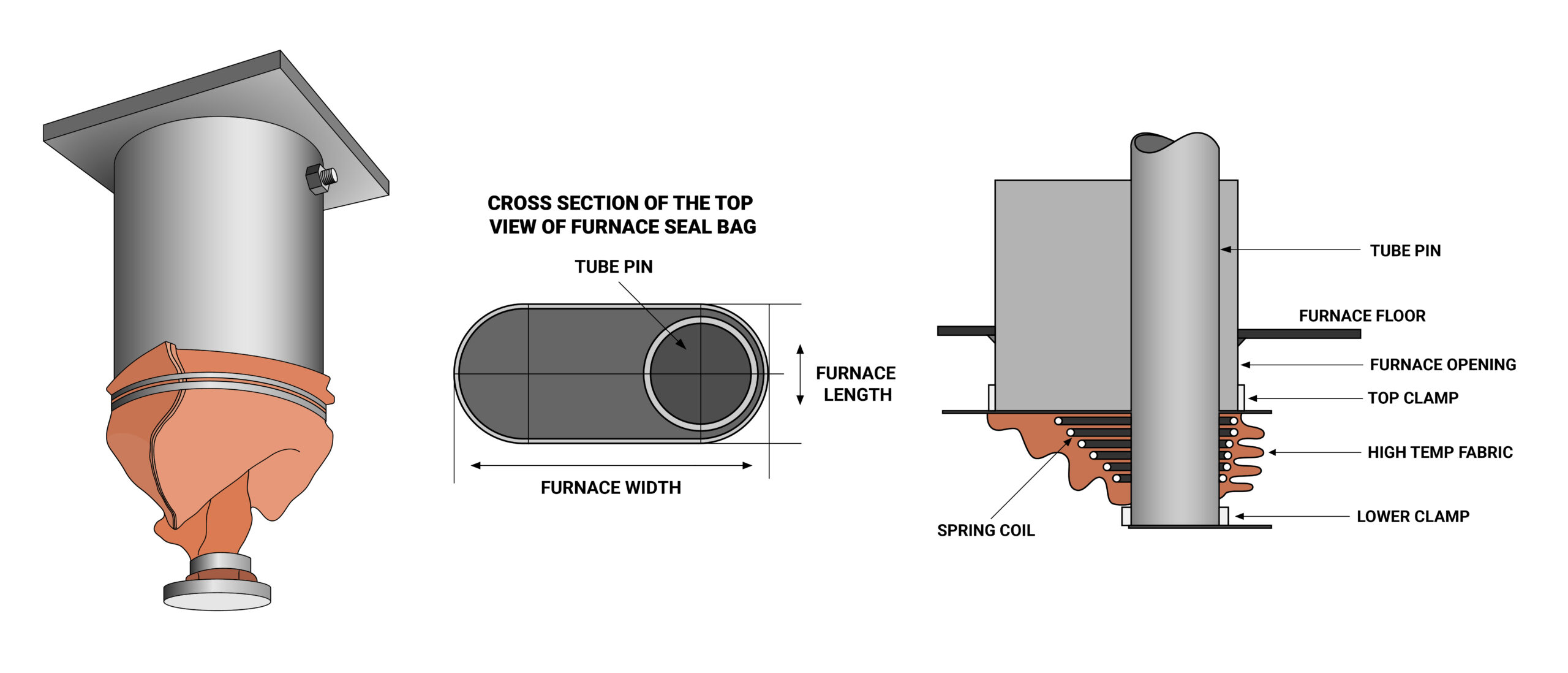
High temperature furnace seal bag from Piping Technology & Products and US Bellows

Sealing Furnaces in Extreme Environments

In heavy industries such as petrochemicals, refining, and chemical processing, furnaces operate at incredibly high temperatures, often exceeding 1000°F (538°C). These demanding conditions present a critical challenge: how do you prevent massive heat loss through openings where pipes penetrate the furnace floor, while simultaneously allowing for essential pipe movement due to thermal expansion and contraction? An unsealed opening is a direct drain on energy efficiency, escalating operational costs, and reducing overall plant performance.

This isn’t a problem that can be solved with standard sealing methods. The solution requires a specialized component engineered to withstand relentless heat and dynamic movement while maintaining its integrity for extended periods. This is where the high-temperature furnace seal bag from Piping Technology & Products comes into play.

Beyond Fabric: A Deep Dive into High-Performance Material Science

At first glance, it might seem like just a “bag,” but beneath its unassuming exterior lies a sophisticated blend of materials science and precision engineering. Our furnace seal bags are meticulously constructed using multiple layers of flexible, high-performance fabrics, each chosen for its specific properties:

  • Extreme Heat Resistance: The core layers are made from advanced refractory materials that withstand continuous exposure to intense radiant and convective heat without degradation. This prevents burnout and ensures long-term thermal containment.
  • Flame and Fire Imperviousness: Beyond heat resistance, these materials are engineered to be non-combustible and to resist flame spread, adding a crucial layer of safety to your operations.
  • Chemical Compatibility: Designed for industrial settings, the materials are selected to resist common corrosive agents and exhaust gases, maintaining their integrity in aggressive atmospheres.

This multi-layer approach creates a solid barrier, providing an airtight seal that reduces heat loss and directly translates into better operational efficiency and substantial energy savings.

Dynamic Design: Accommodating Movement Without Compromising the Seal

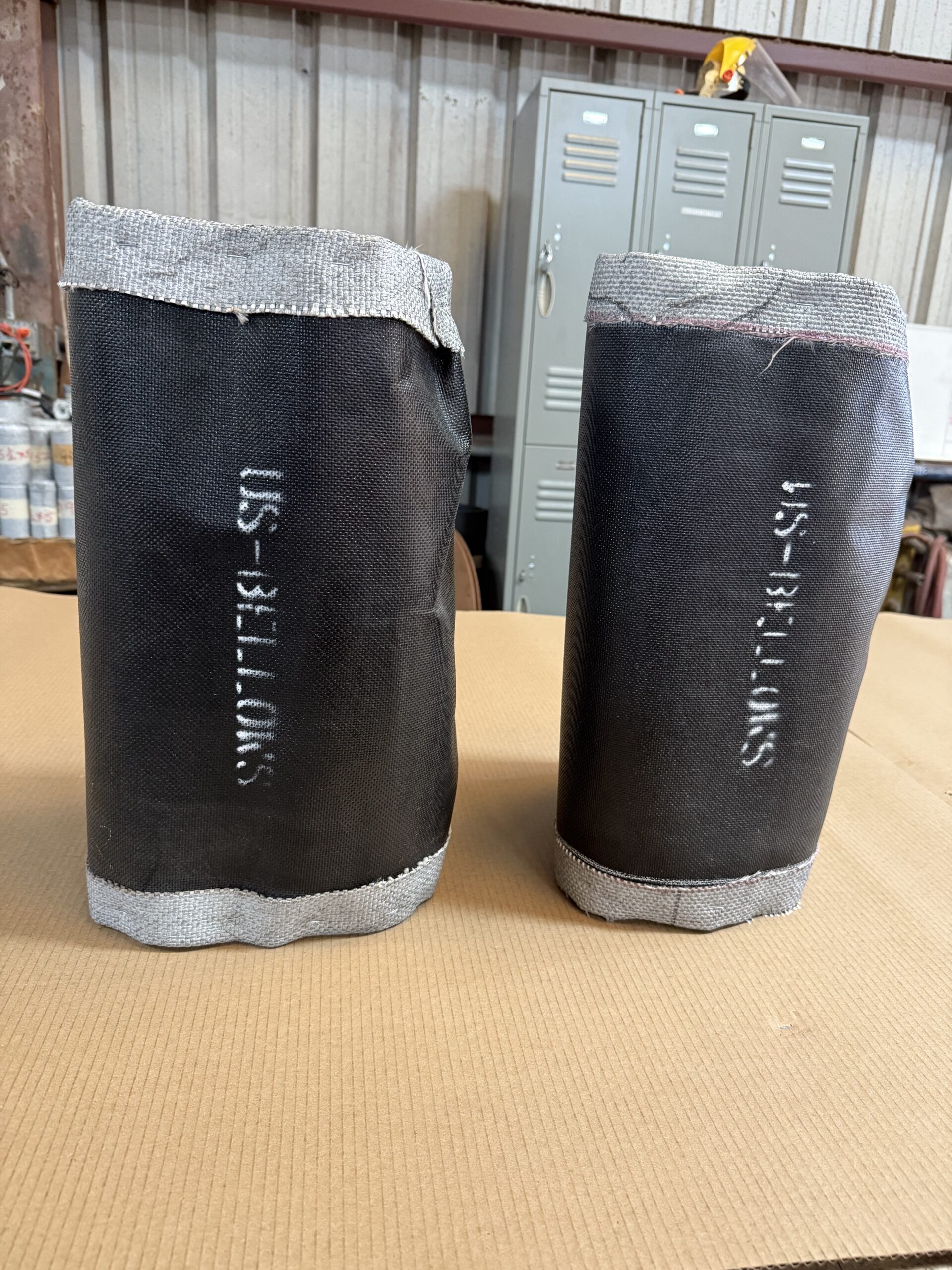
Furnace seal bag from US Bellows: custom engineered to withstand relentless heat

The true genius of the high-temperature furnace seal bag lies in its ability to be both a steadfast seal and a flexible component. Furnaces and the pipes running through them constantly expand and contract with temperature fluctuations. A rigid seal would quickly fail, leading to cracks, leaks, and costly downtime.

Our furnace seal bags are engineered to function similarly to expansion joints. They are designed to:

  • Absorb Thermal Movement: The multi-layered fabric’s inherent flexibility allows the bag to contract and expand with the pipe’s movement, preventing stress on both the pipe and the seal.
  • Maintain Seal Integrity: Despite constant movement, the advanced material construction ensures the seal remains intact, continuously preventing heat escape.
  • Internal Support Structure: A critical, often overlooked, design feature is the tapered steel coil installed internally within the bag. This coil serves a vital purpose: preventing the fabric from collapsing inward during furnace vacuum conditions. Without this internal support, negative pressure could compromise the seal, leading to operational inefficiencies.

This dynamic design ensures continuous, reliable performance throughout entire maintenance “shut-down” cycles, and reduces replacement frequency.

Custom Engineering for Critical Applications with PT&P and US Bellows

At Piping Technology & Products, we understand that every industrial application has unique demands. Our high-temperature furnace seal bags are not one-size-fits-all solutions. We offer custom-engineered designs tailored to your specific furnace dimensions, pipe sizes, operating temperatures, and movement requirements.

Through our subsidiary US Bellows, we design and manufacture advanced high-temperature furnace seal bags that provide high energy efficiency and reliability. By expertly combining specialized material science with dynamic engineering, we ensure critical seals can withstand extreme temperatures and accommodate continuous pipe movement, reducing heat loss and downtime in the most demanding industrial environments.

Our commitment extends beyond just providing a product; we deliver a solution that integrates easily with your existing infrastructure to provide maximum return on investment.

Enhance Your Efficiency: Partner with PT&P Today

Don’t let inefficient furnace seals drain your profits. Upgrade to a solution engineered for improved system lifespan and even better performance. 

Ready to optimize your furnace operations and achieve significant energy savings? Contact Piping Technology & Products today for a custom quote and discover how our engineered solutions can enhance your industrial efficiency.

Read More

Guaranteeing Stability in Piping Infrastructure with U-Bolts

November 7, 2025

Piping Technology and Products U-Bolts and Rods

Every operationally sound piping system, from oil fields to chemical plants, relies on foundational components to maintain integrity and function. Among the simplest of these supports is the U-bolt. While they may appear basic, U-bolts are the key anchors that provide essential stability, restrain movement, and protect your valuable piping assets.

The Mechanics of the U-Bolt: Function and Design

The U-bolt is named for its distinctive “U” shape, which, when installed, wraps around the pipe and is secured to a support structure with two nuts. This design serves two primary functions in piping infrastructure: support and restraint.

The Primary Role: Stabilizing and Supporting Pipe Runs

In its most common application, a U-bolt acts as a simple hanger or support. It transfers the weight of the pipe, the fluid inside, and any insulation to the structural element (such as a girder or foundation) to which it’s fastened. Holding the pipe firmly against a saddle or resting surface prevents downward movement and maintains precise elevation.

The Secondary Role: Lateral Restraint and Guiding

U-bolts are highly effective as pipe guides or restraints. When a pipe experiences dynamic forces, such as high winds, seismic activity, or internal vibration from pumps and flow, the U-bolt prevents lateral (side-to-side) and axial (along the pipe’s length) shifting. This is crucial for:

  • Preventing Damage: Stopping the pipe from rubbing against adjacent structures or equipment to prevent costly wear and abrasion.
  • Controlling Movement: Guiding the pipe to ensure that any necessary thermal expansion or contraction occurs in the intended direction, preventing excessive stress on nozzles and connections.

U-Bolts in Action: Critical Considerations for Installation

While U-bolts are versatile, proper selection and installation are vital to prevent long-term damage to the pipe.

Protecting the Pipe: The Importance of Anti-Friction Pads

A common issue with bare metal U-bolts is metal-to-metal contact with the pipe. Over time, vibration and movement can cause the bolt to wear through the pipe coating or even the pipe wall itself: a condition known as crevice corrosion or pipe wear. To prevent this, industry best practice often requires the use of:

  • Polymer Pads (e.g., HDPE or PTFE): Installed between the U-bolt and the pipe to act as a barrier, absorbing vibration and preventing abrasion.
  • Rubber/Elastomer Lining: Used for quieter systems or in applications where vibration dampening is paramount.
Material Selection: Matching the Environment

The harsh environment of industrial facilities dictates careful material choice. For standard dry environments, galvanized carbon steel may suffice. However, in applications with high humidity, chemical exposure, or extreme temperatures, stainless steel (304 or 316) U-bolts are necessary to ensure corrosion resistance and structural integrity over decades of service.

Engineered U-Bolts for Exceptional Performance with PT&P

At Piping Technology and Products, we recognize that even the simplest components require precision engineering. We provide high-integrity solutions that withstand the most demanding industrial environments.

Our goal is to elevate the performance of foundational components. We ensure the long-term integrity and reliability of your entire piping system by delivering custom-manufactured U-bolts and supports that meet your exact specifications for material, load capacity, and corrosion resistance, eliminating the risks associated with inadequate, off-the-shelf components.

We offer:

  • Custom Sizing and Threading: U-bolts designed for non-standard pipe diameters and complex geometries.
  • Exotic Materials: Fabrication using specialty alloys for extremely high-temperature or highly corrosive services.
  • Integrated Solutions: Providing the U-bolt complete with the correct saddle, pad, and coating for a guaranteed non-abrasive, high-performance installation.

 Don’t gamble your infrastructure on generic U-bolts. Contact Piping Technology and Products today to secure your system with U-bolts and supports engineered for absolute reliability and a longer lifespan.

Read More

CAESAR II, AutoPIPE, or CAEPIPE? Your Engineer’s Guide to Choosing the Right Pipe Stress Analysis Software

November 4, 2025

Pipe stress analysis

The integrity of a piping system is only as good as the stress analysis that proves its design. For engineers responsible for plant safety and compliance, selecting the right software is the most critical step.

While many tools exist, three industry titans consistently lead the conversation in pipe stress analysis (PSA): CAESAR II, AutoPIPE, and CAEPIPE.

We’ll compare these leading solutions, providing an overview of where each excels so you can make an informed choice that guarantees both compliance and reliability.


CAESAR II Pipe Stress Analysis Software

CAESAR II Pipe stress analysis Software


AutoPipe Pipe Stress Analysis Software

Pipe Stress Analysis Software


Software Comparison Table (CAESAR II, AutoPIPE, CAEPIPE)

Feature / Software CAESAR II (Hexagon) AutoPIPE (Bentley Systems) CAEPIPE (SST Systems)
Market Position Widely considered the industry standard and market leader with the most extensive user base. A major competitor, it is powerful due to its integration with the Bentley ecosystem. Known for its ease of use, fast analysis, and intuitive interface.
User Interface / Modeling Spreadsheet-based data entry combined with a 3D graphical modeler. Highly detailed and robust. Object-oriented, CAD-like graphical interface (point-and-click modeling) is often cited as highly intuitive. Clean, multi-window interface providing simultaneous visual and textual feedback.
Key Differentiator Extensive Code Compliance: Supports the most international codes and standards, such as ASME B31.1 Power Piping, ASME NC & ND Boiler and Pressure Vessel Code. Optimization & Interoperability: Includes a Support Optimizer (AI/Machine Learning) and deep integration with Bentley/3D CAD products (STAAD.Pro, OpenPlant). Speed and Simplicity: Emphasis on fast solution times and a minimal learning curve for quick productivity.
Advanced Analysis Static, dynamic, vibration, fatigue, wind, seismic, and wave loading. Fluid Transient (Water Hammer), buried pipe analysis with upheaval, and Flange analysis. Random vibration (PSD), Force Spectrum Analysis, detailed Fatigue calculations (Steinberg’s Method).
Integration Good integration via PCF, PDS, and other formats. Excellent interoperability with Bentley products and other major CAD systems (SmartPlant, Aveva PDMS/E3D). Strong data import/export from major 3D design software (AutoCAD Plant 3D, PDMS).
Hyperlink CAESAR II AutoPIPE CAEPIPE


CAEPIPE Pipe Stress Analysis Software

Caepipe Pipe stress analysis

How They Compare: The Key Differences

1. The Industry Standard vs. The Ecosystem Player

  • CAESAR II is the veteran and remains the benchmark. Many consulting and EPC firms use it as their default tool, and it is a common requirement in job postings. Its strength lies in its long history and unmatched depth of code libraries.
  • AutoPIPE is widely used by organizations already operating within the Bentley ecosystem (using tools such as MicroStation or OpenPlant). Its seamless integration with structural analysis software (STAAD.Pro) is a significant advantage, enabling a combined piping and structural analysis workflow.

2. Modeling Philosophy: Spreadsheet vs. Graphics

  • CAESAR II often requires more upfront data entry in a spreadsheet format, which some veteran users prefer for its precision and structure.
  • AutoPIPE and CAEPIPE are often praised for their modern, CAD-like graphical modeling, which features point-and-click functionality, significantly reducing the learning curve and speeding up initial model creation and modifications. CAEPIPE, in particular, emphasizes a simple, intuitive user interface for rapid modeling.

3. Advanced Features and Niche Analysis

  • AutoPIPE Advanced stands out with tools like the Support Optimizer, which uses machine learning to quickly evaluate thousands of support configurations, helping engineers optimize support costs and placement—a huge win for large projects.
  • CAESAR II has a strong focus on compliance and is highly robust in general dynamic and vibration analysis.
  • CAEPIPE is well-regarded for its fast nonlinear analysis (gaps and friction) and specialized tools for random vibration, making it a favorite in industries like aerospace and nuclear, where rapid, complex analysis is critical.

Choose Piping Technology & Products(PT&P)

PT&P is the physical link between your pipe stress analysis and guaranteed field performance.

We specialize in translating complex load reports and displacement results from CAESAR II, AutoPIPE, and CAEPIPE into precisely engineered pipe supports and expansion joints: ensuring the reliability calculated in your software model becomes a reality in your plant’s operation.

Your software has calculated the loads: now let’s secure them. Click here to get a custom quote for supports that validate your stress analysis and guarantee long-term system integrity.

Read More

What Every Plant Manager Needs to Know About Pipe Stress Analysis

November 4, 2025

What Every Plant Manager Needs to Know About Pipe Stress Analysis

If you manage a process plant, power facility, or oil and gas operation, you know that piping systems are at the center of your entire operation. But how often do you think about the hidden forces: the intense pressures, temperature shifts, and vibrations that are constantly pushing your pipes to their breaking point?

Ignoring these forces isn’t just a risk; it’s a guaranteed path to costly downtime, failures, and safety hazards. This is where pipe stress analysis comes in: it’s the essential engineering practice that ensures your piping system not only works but lasts. (more…)

Read More

U-Type Constants Designed with Slide Plates for a Polypropylene Plant in Texas

October 27, 2025

147164a1

Constants use a spring coil (or series of coils) to accommodate pipe movement from the initial (installed) condition to the final (operating) condition of the piping system. For all constant spring supports, there is no difference in load, and the supported load will remain uniform throughout the deflection cycle.

PT&P designed and fabricated a U-Type constant spring support , with PTFE and a 25% glass-filled side plate for a polypropylene plant in Texas. The constant is fabricated from carbon steel and hot-dipped galvanized for extra protection against corrosion. The vertical movement is 1.5″ total upward travel and is capable of supporting a load of 10,350 lbs. throughout its range of movement. The constant underwent standard load testing prior to shipment.

Along with chemical plants, constant spring supports are utilized in refineries, power plants, and heat recovery steam generators (HRSG). The design of the constant spring support replaced a system of pipe support called a “counterweight” design still used in some facilities today. The counter-weight system utilized pipe clamps or lugs (attached or welded to the pipe), cables, pulleys, and a set of weights. Just like the old-fashioned brass weighing scales, weights were added to one end of the pulley system until an equilibrium was reached. The counterweight design needed a large amount of space with which to operate. Constant spring hangers replaced this system because they require much less space in order to function (similar to some designs we stand on to weigh ourselves). No matter the application, our team of experienced engineers and designers can help to resolve your pipe support needs. Please contact us via our 24×7 emergency service or send an email to [email protected].

PT&P REF. ORIGINAL POST 08232016

Read More

Cold Shoes and Hot Shoes Designed for an Ammonia Project

October 13, 2025

Insulated Pipe Supports Designed for Cryogenic and High Temperature Pipe Systems for an Ammonia Project

Insulated pipe supports are designed to prevent direct heat transfer between pipes and their supports. Thus, they prevent heat loss due to conduction at each support. Whether a cold or hot temperature pipeline, the transfer from cold to hot or hot to cold is prevented. They serve the following purposes: Carry the load and allow necessary movement (when used with slide plates) at each point of support, provide insulation in the support area where the regular pipe insulation is not sufficient to support the load, and minimize installation costs by reducing the time required to install the support. The supports are not welded to the pipe, and each unit is shipped completely assembled (except for the riser supports and anchor supports, both of which require some welding). In HVAC and plumbing applications, insulated supports also help prevent condensation and corrosion under insulation (CUI) by maintaining the vapor barrier at the support point. Their use contributes to better energy performance, reduced maintenance, and compliance with MEP design standards focused on energy efficiency and moisture control in building systems.

For this project, we custom-designed 98 insulated pipe supports for an ammonia project at a chemical plant in Louisiana. The supports were designed for both cryogenic and high-temperature pipe systems, with an 8″ to 22″ baseplate width and a 10″ to 28″ saddle length. They were designed for pipe diameters of 6″-24″ and are composed of polyurethane foam for cryogenic and high-density calcium silicate insulation for high temperatures. Standard Q.C. and dimensional tests were performed prior to shipment.  

This project was a combination of upgrading a current anhydrous ammonia plant and adding new capacity to the facility. We worked with the EPC, on-site contractors, and operators to ensure specifications and delivery deadlines were met over a three-year period during project construction. In addition to the insulated supports discussed here, we designed, manufactured, and shipped bellmouth reducers, metallic expansion joints, pipe shoe guides and anchors, pipe hanger hardware, slide plates, snubbers, sway braces, struts, and variable spring supports.

Beyond ammonia and chemical processing facilities, insulated pipe supports are widely used across other industries where thermal control and system integrity are essential. These include petrochemical plants, LNG and cryogenic gas facilities, power generation plants, and district energy systems for heating and cooling networks. They are also integral to MEP infrastructure in data centers, pharmaceutical manufacturing, and food processing plants, where preventing condensation and maintaining precise temperature control are critical. In each of these applications, insulated supports help maintain energy efficiency, protect against corrosion under insulation, and ensure long-term reliability of piping systems operating under extreme temperature conditions.

PT&P REF. ORIGINAL POST 06232015

Read More

F-Type Constant Spring Supports Designed and Manufactured for Gas Plant

September 29, 2025

F-Type Constant Spring Supports Designed and Manufactured for Gas Plant

Type: F-Type Constant Spring Supports
Size: 36″- 87″ Length | 24″ Height
Material: A36 Carbon Steel | HDG | SS Slide Plates
Design: 13,500 lb. Load | 250°F | 17.5″ Travel
Testing: Q.C. Inspection | Load and Travel Tests

We custom-designed multiple horizontal F-Type constant spring supports for a series of offshore gas platforms located in the Persian Gulf, near the coast of Saudi Arabia. These constants feature stainless steel slide plates and are engineered for a total travel of 17.5 inches. Fabricated from carbon steel, they are hot-dipped galvanized and coated with a specialized three-layer paint system to withstand the harsh, highly corrosive environment. Per the client’s specification,  the topcoat is painted “Safety Yellow” for easy identification.

To further enhance corrosion resistance, the bolting assemblies used in constructing these units were coated with a fluoropolymer, which also helps to reduce friction and wear. Each assembly measures 24 inches in height and ranges from 36 to 87 inches in length. They are designed to operate at temperatures up to 250°F and handle loads of up to 13,500 pounds. Load testing and dye penetrant inspections were performed in-house to ensure quality and reliability before shipment. Our manufacturing is based on a long test and reliability work methodology, with our roots in engineering and design when we started as a pipe stress company.  In addition to manufacturing the products our customers design for their specific applications, we also conduct testing to meet both our quality standards and their requirements.  

F-type constants manage loads, thermal compensation, vibration dampening, and vertical and lateral movements in piping systems.  We have supplied constants for a myriad of end applications worldwide. The industries we have worked with that need this kind of product in their piping systems include: 

  • Energy and Oil & Gas
  • Chemical and Petrochemicals
  • Renewable Energy and Sustainability 
  • Industrials and Manufacturing
  • Automotive
  • Semiconductor
  • Pulp and Paper
  • Utilities and Power
  • Construction and Building Materials 

We have optimized our manufacturing process to offer an unparalleled range of customization options with minimal impact on delivery timelines. In addition to our standard (hot-dipped galvanized carbon steel with neoprene-coated spring coils) constant spring supports, we can customize any material, finish, dimension, load, load adjustment, travel, and travel stops, as well as provide sensors for remote monitoring. 

Historically, obtaining a custom-designed constant spring support posed a significant challenge in terms of both design and manufacturing, with lead times extending to a minimum of 6-8 weeks.

Through a dedicated focus on manufacturing optimization and employing a design-centric engineering approach, we have reduced the required manufacturing time by more than half. The process of acquiring custom constant spring supports is now significantly streamlined. In fact, we are capable of fulfilling emergency orders in less than 24 hours, taking into account the client’s location and urgent requirements.

We can also provide the services of our well-trained field service teams for installation guidance, should it be needed.  

At our Houston-based facility, we design and manufacture constant spring supports with unmatched speed and precision. Operating 24/7, we are equipped to handle both small emergency orders and large-scale production needs. Our wide range of industry expertise demonstrates our unique ability to provide solutions across the globe in every sector we serve.


Read More

Unlocking Pipeline Efficiency: The Ultimate Guide to Pig Launchers

September 15, 2025

Us bellows pig launcher

Your pipeline is the circulatory system of your operation, and just like a human body, it requires routine maintenance to function at its peak. 

In chemical and petrochemical industries, pigging systems are used to separate different products within a pipeline to prevent contamination, as well as for cleaning and inspection. In water and wastewater treatment, they help remove sediment, biofilms, and scale from municipal mains to improve water quality and flow efficiency. In the food and beverage sector, pigging is employed to reclaim valuable products and prevent cross-contamination when transporting different batches of liquids such as chocolate, dairy, or juices. Similarly, in pharmaceuticals and cosmetics, pigging is applied in sanitary processes to clean and inspect pipelines, ensuring product purity and compliance with strict hygiene standards.

Pigging: the act of using a device called a “pig” to clean, inspect, or maintain a pipeline, is the most effective way to achieve optimal performance from your piping operation. And at the center of any successful pigging program is the pig launcher.

A pig launcher is a specialized piece of equipment that safely introduces a pipeline pig into a pressurized line. It’s a critical component that delivers efficient and safe pigging operations. 

Choosing the right one is important. This guide will help you understand the benefits and options available, enabling you to make an informed choice that will aid in maintaining a debris-free piping operation.

Equipment

The physical infrastructure is essential for any pigging operation. This equipment, including pig launchers and receivers, enables the safe and efficient introduction and removal of pigs from the pipeline.

  • Pig Launcher: An oversized section of pipe where a pig is loaded and then launched into the main pipeline. It’s equipped with a quick-opening closure for easy access and various valves to control pressure and fluid flow.
  • Pig Receiver: Located at the end of a pigging run, this is a similar oversized section of pipe designed to catch the pig and any debris it pushes. It also features a quick-opening closure for retrieving pigs and debris.
  • Kicker and Bypass Lines: The kicker line is a smaller pipe that directs a portion of the product flow into the launcher to propel the pig. Bypass lines are used in receivers to allow continuous product flow while the pigging process is underway.

Why Pig Launchers Are Important for Your Piping Operation

Investing in a quality pig launcher isn’t just about maintenance; it’s about safeguarding your assets and maximizing your return. The benefits extend far beyond a clean pipe:

  • Boosted Productivity and Flow: Debris, wax, and scale buildup inside pipelines can restrict flow, increase friction, and reduce overall throughput. Regular pigging removes these blockages, improving flow rates and boosting operational efficiency.
  • Reduced Operational Costs: By recovering valuable products, minimizing waste, and decreasing the need for extended shutdowns for manual cleaning, pigging systems can lead to significant cost savings.
  • Increased Safety: Modern pig launchers are designed with safety features, such as quick-opening closures and pressure relief devices, to protect personnel and equipment during operations, thereby mitigating risks associated with high-pressure systems.
  • Product Batching and Separation: For companies that transport different products through the same pipeline, pigging allows for the effective separation of batches, preventing cross-contamination and ensuring product purity.

For a deeper dive into how custom solutions can address specific challenges, read our companion piece: Custom-Designed Pig Launcher.

Your Options: Choosing the Right Pig Launcher

Pig launchers are not one-size-fits-all. They are highly customized based on your specific application, pipeline dimensions, and operational needs. Here are the key factors you need to consider:

Sizing and Pressure

The most important considerations are the size of your pipeline and the operating pressure. The launcher’s major barrel must be large enough to hold the pig, while the minor barrel must match the diameter of the pipeline. Our capacity for design pressure range is up to  4000 PSIG (pounds per square inch gauge) for pig launchers and receivers:

Material Selection

The material of the launcher is critical for lifespan, application, and media integrity . Most are fabricated from carbon steel, but for corrosive or sanitary/food grade applications (e.g., food and beverage/pharma), materials like stainless steel are often required to prevent contamination and withstand harsh environments.

Level of Automation

Pig launchers come with various levels of automation. From simple, manually operated systems with flag indicators to fully automated, remotely controlled units, the choice depends on your budget and the frequency of pigging operations. Automated systems reduce operator involvement, increase safety, and enable more frequent and aggressive pigging programs.

Things We Need to Know, Before We Quote a Pig Launcher or Receiver 

  • What will the launcher be used for, liquid or gas? This will determine the design code.
  • What will be the pressure and temperature of the fluids in the operating system?
  • Will you need supports (legs) to be included?
  • What type of finish will you select? The standard finish is our shop primer.
  • Do you have any special requirements? Anything added to a launcher or receiver can increase both complexity and cost.
  • What is the location of closure, where the pig will be loaded? As pressure requirements increase, closure options become more restrictive.

Specialized Features

To optimize your system, consider these options:

  • Quick-Opening Closures: These are essential for safe and rapid access to the launcher barrel, allowing for the insertion or retrieval of the pig.
  • Instrumentation Ports: These allow for pressure monitoring, while vents and drains are crucial for depressurization and cleaning.
  • Bypass Lines: A bypass allows product flow to continue while the launcher is offline for maintenance.

Multiple-Pig Systems: For complex operations, launchers can be designed to hold and launch multiple pigs in sequence, which is ideal for multi-stage cleaning or intelligent inspection.

At Sweco Fab, a Piping Technology & Products company, we offer the following capabilities for pig launchers and receivers:

Fabrication Design Codes Materials of Construction Design Pressure Range Pig Trap Size Ranges Maximum Overall Skid Offered Shop Certifications
ASME B31.4, B31.8, B31.4 & Sec. VIII Div.1 CS, LTCS, SS 304, SS316 & API Pipes Up to 4000 PSIG Line 2″ NPS to 48″ NPS Lines 8′ x 40′ x 10′ (Up to 40,000 Lbs weight capacity) ASME U & R Stamp certified, ISO 9001

Don’t Leave Your Pipeline to Chance: Partner with Piping Technology & Products (PT&P)

Every pipeline is a significant investment, and its performance directly impacts your bottom line. By selecting the right pig launcher and receiver system, you can ensure continuous operation and protect your infrastructure. The decision to pig your pipeline is the first step toward a smarter, more profitable operation. The next step is choosing a partner like PT&P who can provide the right solution, tailored to your exact specifications.

Ready to boost performance and safety in your pipeline operations? Contact our experts and request a quote today to design a custom pig launcher.

Read More

September 2025 News: PT&P is Awarded the ISO Certificate

September 5, 2025

PT&P is Now ISO 9001:2015 Certified (09-05-2015)
Piping Technology & Products, Inc. is awarded the ISO 9001:2015 certificate by DNV Certification, a division of Det Norske Veritas (DNV), for the Manufacture of Hot and Cold Pipe Supports. This certificate proves that PT&P’s Quality Management System has been certified against the best practice standard and is compliant.

ISO 9001:2015

View ISO 9001:2015 Certificate

The latest version of standards, ISO 9001:2015 is created by the International Organization for Standardization (ISO), who set international requirements for Quality Management Systems. By conforming to the Quality Management System, Piping Technology & Products, Inc. demonstrates predictability of internal operations and the ability to meet customer requirements. While becoming certified, a company can identify the areas that are most critical to operations through management system audits. Once problem areas are identified, measured, managed and improved, customer satisfaction will rise, staff responsibility and motivation will also experience growth.

Read More
Top